
24 Organize a welcoming work event
Office Murder Mystery Party: How to Plan a Team-Building Event
Organize an office murder mystery with a filled event brief, licensing checks, accessible room planning, a responsibility table, and a sample schedule.

An office murder mystery party can be an enjoyable shared event when colleagues know what they are joining and the organizer makes participation practical. A suitable story, a complete cast, a readable room, and a realistic timetable matter more than ambitious decorations. Treat it as entertainment with an optional chance to reflect together afterward.
This guide includes a filled organizer brief, a responsibility table, and a sample afternoon. It does not promise productivity gains, measure colleagues' abilities, or turn fictional behavior into evidence about real workplace relationships.
Start with an invitation people can decline
Describe the activity before asking for a commitment. Explain that participants will receive fictional roles, read permitted information, talk with others, and follow a mystery to its ending. State whether costumes are optional, how long the event lasts, where it happens, and whether refreshments are provided.
Give people a private route to ask questions or decline. Some colleagues enjoy roleplay; others would rather attend another kind of social event. A clear choice helps you build a cast from people who want to participate, rather than assigning essential roles to people who feel obliged to attend.
Separate the event from performance assessment. Avoid ranking employees by their acting, confidence, speed, or accusations. The fictional game can be competitive if its rules call for that, but it should remain clear that a party result is not a workplace evaluation.
Choose a story that fits this group
Read the public premise and available content guidance. Consider whether the group's preferences suit fictional office politics, a historical setting, a seasonal mystery, or a more distant setting such as a hotel or gala. Ask about tone rather than assuming everybody wants the same level of suspense.
The Corporate Holiday Office-Party mystery is a current workplace-themed option. Its public description uses a fictional company. Consider whether that theme sounds enjoyable to the actual group; an unrelated setting from the current game collection may be a better social choice for some colleagues.
Confirm the active cast, available preparation time, reading demands, and host arrangement. A large attendance list does not automatically establish that one edition supports every person as an active player. Use the group-size guide, then follow the specific game's casting instructions.
Check the event-use permission
The current Capital of Mystery terms expressly include workplace events within the licence for an organizer's own private event or internal group activity. Read the current terms and any edition-specific conditions before purchase. Ask through the contact page about paid public events, client delivery, repeated commercial hosting, or any use outside that stated arrangement.
Keep the purchased files within the permitted event group. An office shared drive is not automatically the right place for the entire kit, particularly when it contains private roles and solutions. Distribute only the materials each participant is allowed to receive.
Use a one-page organizer brief
Complete this before invitations go out. The filled example below is fictional: it assumes an internal social event for twelve willing adults and a selected edition confirmed to support that cast and a two-hour game window. Substitute your real details after checking the kit.
| Decision | Example answer | Confirmation still needed for a real event |
|---|---|---|
| Purpose | Optional internal afternoon social activity. | Organizer and budget owner agree the purpose. |
| Active players | Twelve confirmed volunteers. | Chosen edition supports the exact cast. |
| Story preference | Light suspense with an agreed public premise. | Participants have a private way to raise content concerns. |
| Host | Organizer Priya, using the edition's supported arrangement. | Host preparation and solution knowledge are understood. |
| Venue | Meeting Room B with adjacent refreshment space. | Access, seating, visibility, and sound checked with participants. |
| Timing | 2:00–5:00 p.m., including arrival, game, and optional debrief. | Complete game fits 2:25–4:25, or the event is extended. |
| Clothing | Ordinary work clothes; optional small theme accessory. | No purchase or performance expectation. |
| Food | Prepared sandwiches, fruit, water, and agreed alternatives. | Ingredients and serving plan confirmed. |
| Materials | Private packets, permitted shared materials, pencils, and ballots. | Exact contents prepared from the purchased edition. |
| Changes contact | One organizer email or direct contact. | Attendance changes reach the host before play. |
A brief becomes useful when someone can act on every row. “Accessible venue” is a starting intention; “participants have checked the route and requested seating arrangements” is a concrete preparation task.
Assign roles without copying the office hierarchy
Ask about practical preferences: comfort with reading, speaking, costumes, and preparation. Use the official casting rules to make the supported assignments. Keep requests private and avoid asking colleagues to explain personal information in front of the group.
A manager does not need to play the fictional boss. A quiet colleague does not need an unimportant role, and a confident colleague does not need to lead every conversation. Avoid matching fictional flaws or conflicts to real reputations as a joke.
Send only the permitted character information to each person. Explain what they can read before the day and what stays closed. Keep one private assignment list so the organizer can resolve a missing file or change without sharing every role.
If someone wants a lower-pressure way to take part, establish what the edition supports. An ordinary voice, a comfortable seated conversation, or a permitted reading format may help. An observer, partner, or shared role changes participation and must be checked rather than assumed to fit.
Make the room work for the participants
Check the route from entrance to room and bathrooms, the seating, the usable table surfaces, and the ability to hear announcements. Ask people privately what arrangements would help them join. A room photograph or a chance to inspect the space can make these questions easier to answer.
The W3C accessible-events checklist recommends asking participants about access requirements, checking the venue, planning breaks, and managing distracting sound. Apply those points to this gathering with the participants concerned. The checklist supports practical event planning; it is not a certification of your room or game.
Give shared information a consistent place with good light. Position it so people can read without reaching across food or standing behind a crowd. Keep private materials at individual places and offer a dry surface for note-taking where needed.
Background music is optional. Quiet usually makes introductions and detailed conversations easier to follow. Finish catering setup before the briefing, and arrange refreshments outside the main investigation area so delivery noise does not compete with the host.

Divide preparation into named jobs
The organizer should know who is doing each task and when it must finish. A small responsibility table prevents the same person from setting up food, resolving role files, and making announcements at once.
| Task | Owner in this example | Due point | Finished means |
|---|---|---|---|
| Permission, budget, and room | Event organizer | Before invitations. | Event type and venue are agreed. |
| Attendance and practical preferences | Organizer | Before casting. | Active cast and participant needs are known. |
| Kit preparation and private delivery | Designated host | Before the day. | Correct role files and shared materials are ready. |
| Room and equipment | Venue helper | Thirty minutes before arrival. | Lighting, routes, chairs, and any sound equipment work. |
| Food and ingredient information | Catering helper | Before the briefing. | Service is set up without interrupting play. |
| Arrival check | Organizer | Before game start. | Required players and materials are present. |
| Clearing and material collection | Two agreed helpers | After the reveal. | Private pages are handled appropriately and room is restored. |
A helper who also plays should finish their operational task before they are needed. Give the host the whole game window. If the plan requires someone to leave repeatedly for deliveries or calls, change that duty or choose another event arrangement.
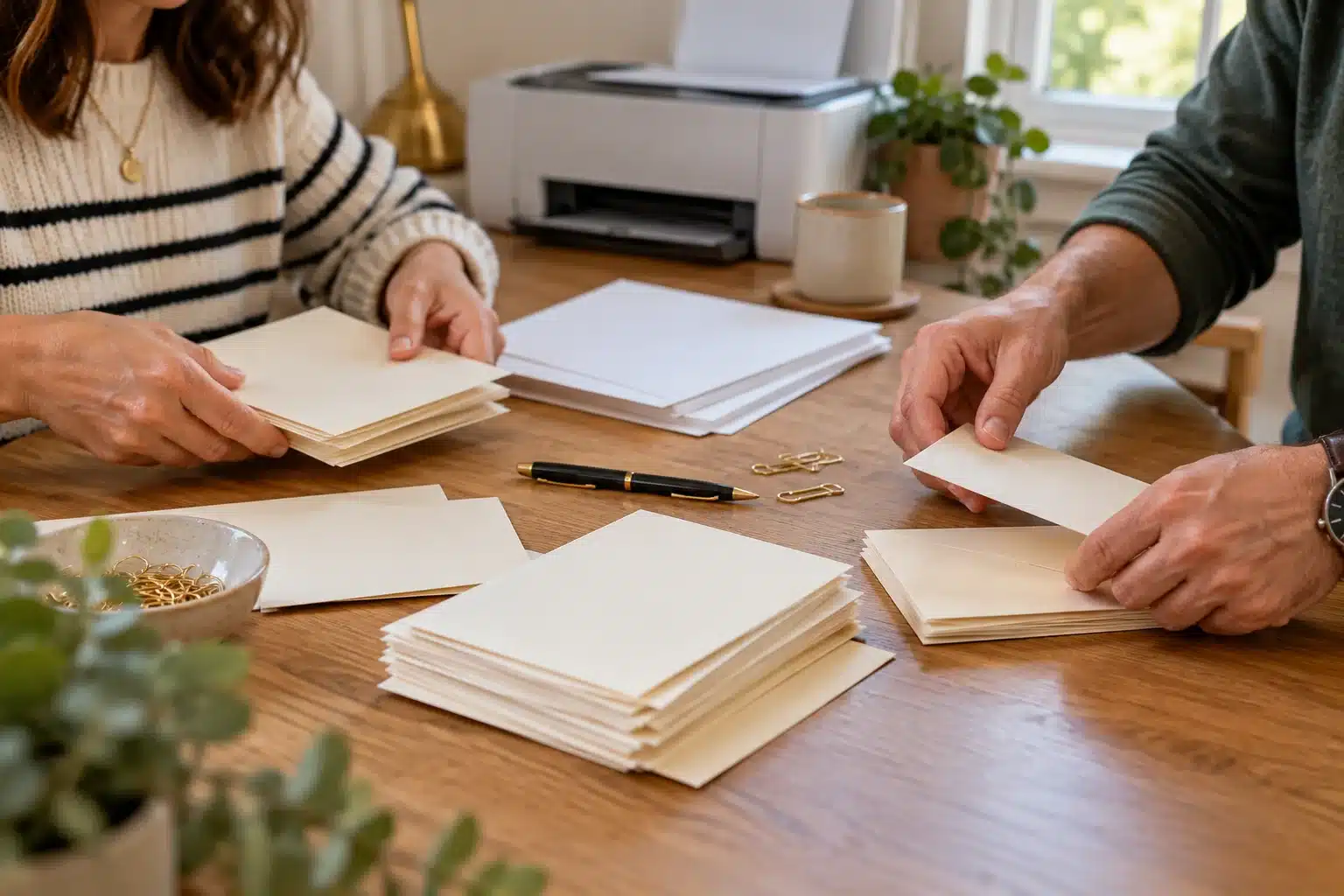
A realistic afternoon schedule
This filled schedule assumes the selected edition fits a complete two-hour window. It is an example of event organization, not a claim about the duration of the linked office game. Verify the fit with the actual instructions and extend the booking if necessary.
| Time | Activity | Organizer's focus |
|---|---|---|
| 1:30–2:00 p.m. | Setup and a final room check. | All operational work finishes before guests arrive. |
| 2:00–2:20 p.m. | Arrival and prepared refreshments. | Confirm the complete cast and resolve file problems privately. |
| 2:20–2:25 p.m. | Clear food and assemble the group. | Everyone can see and hear the host. |
| 2:25–4:25 p.m. | Complete official game sequence, including permitted breaks and reveal. | Follow the edition rather than a meeting agenda. |
| 4:25–4:40 p.m. | Optional awards and a short social debrief. | Keep comments about the fictional experience. |
| 4:40–5:00 p.m. | Refreshments, material collection, and clearing. | Restore the venue and respect the agreed finish. |
Resolve late arrivals before starting a cast-dependent game. Check the affected role and the supported options; an unexplained empty chair can matter more than it would in an ordinary meeting. Use the home-hosting guide for the wider preparation logic, adapting the venue details to work.
Keep the optional debrief light
Ask questions such as “Which part of the format did you enjoy?” or “Would you choose another theme next time?” People can discuss a funny fictional moment after the official reveal without analyzing a colleague's real motives or personality.
If you want to gather feedback, ask about the event: clarity, timing, comfort, and whether people would voluntarily attend again. Do not convert a game's accusations or roleplay into a formal measure of trust, leadership, collaboration, or productivity.
Awards can be friendly and optional. A certificate supplied with the kit is enough if the group likes that element. There is no need to build a scoreboard of real colleagues beyond the actual rules of the entertainment.
Final organizer checklist
Office party questions
Does everyone need to act or dress up?
Explain the actual edition's participation requirements, then set reasonable public expectations. Ordinary voices and work clothes may fit your plan, but a supported active role still needs its required information sharing.
Can one purchase be used for a client event?
Check the current terms and ask support about the exact use. Permission for an organizer's own workplace group should not be assumed to cover every paid, public, or client-delivered arrangement.
Will the event improve teamwork?
It can provide a shared social experience. This guide makes no claim that one party produces a measurable workplace improvement or assesses employees' abilities.
Find the right mystery for your group
Choose by your confirmed players, occasion, and preferred atmosphere. Check the exact edition’s casting and hosting details before preparing your files.
Explore the mystery kits →General planning advice: your exact game edition’s instructions govern casting, information sharing, and the reveal. Illustrative images do not show official evidence or actual customer events.