
29 Plan the garden and the backup
Camping Murder Mystery Party: Ideas for a Backyard Camp Night
Host a camping murder mystery with useful reading light, organized papers, an indoor backup, a venue comparison table, and an early-evening schedule.
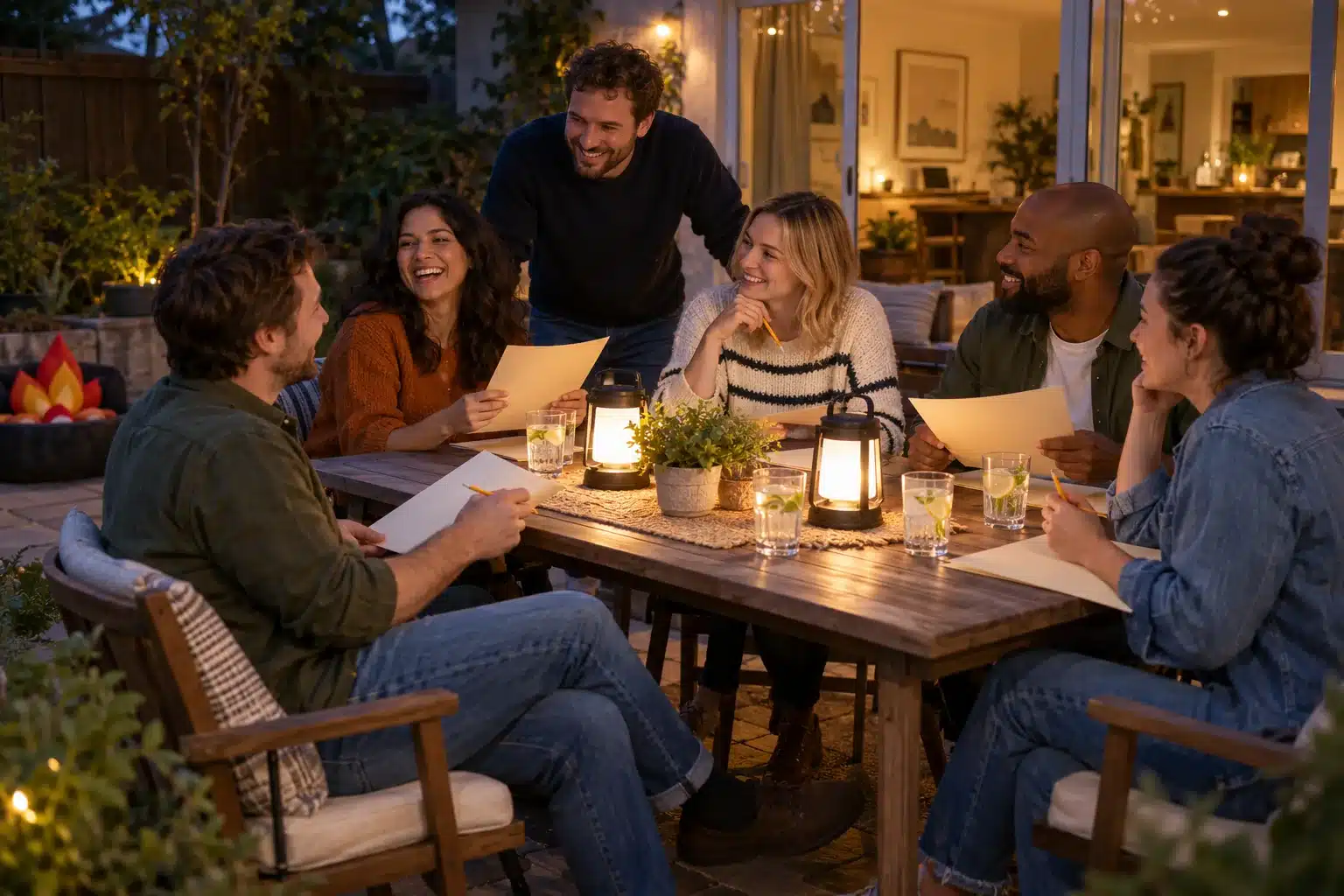
A camping murder mystery party can work in a modest backyard with comfortable chairs, a stable table, useful reading light, and an indoor backup. The camp atmosphere can come from lanterns, casual clothes, and a simple snack surface. You do not need a real fire, overnight equipment, or a remote venue to create the setting.
Plan the investigation first and the outdoor decoration second. Guests need to hear, read, compare information, and stay together through the official ending. If the garden makes those things difficult, moving inside can preserve the whole evening.
Choose a camp setting that fits your group
The current Summer-Camp Counselors game, Campfire & Cold-Blood, provides a public camp-themed mystery to examine. Check the actual edition's content, cast, preparation, and host arrangement before choosing it. A summer-camp setting does not automatically make a game suitable for younger children or establish how much reading it involves.
Confirm who will be an active player and who will handle practical hosting. If one player also hosts, establish how that affects preparation and knowledge of the solution. Use the group-size guide as a planning aid, then follow the exact edition's casting instructions.
Explain that this is a complete character-based game, not a casual activity people can enter and leave at any time. The public invitation should give arrival, game start, expected finish, clothing advice, food details, and the indoor fallback. Send private role material individually according to the permitted reading stages.
Prepare the indoor version before decorating outside
Choose a room that can hold the complete cast comfortably. Clear it before arrival and identify where the shared materials, individual packets, and refreshments will go. The fallback should be ready to use, rather than a room you would need to empty while everyone waits.
Use the same basic arrangement indoors and out: a main gathering point, dry surfaces for private reading, a consistent place for shared information, and a separate food area. Similar organization makes a move easier because people know what belongs where.
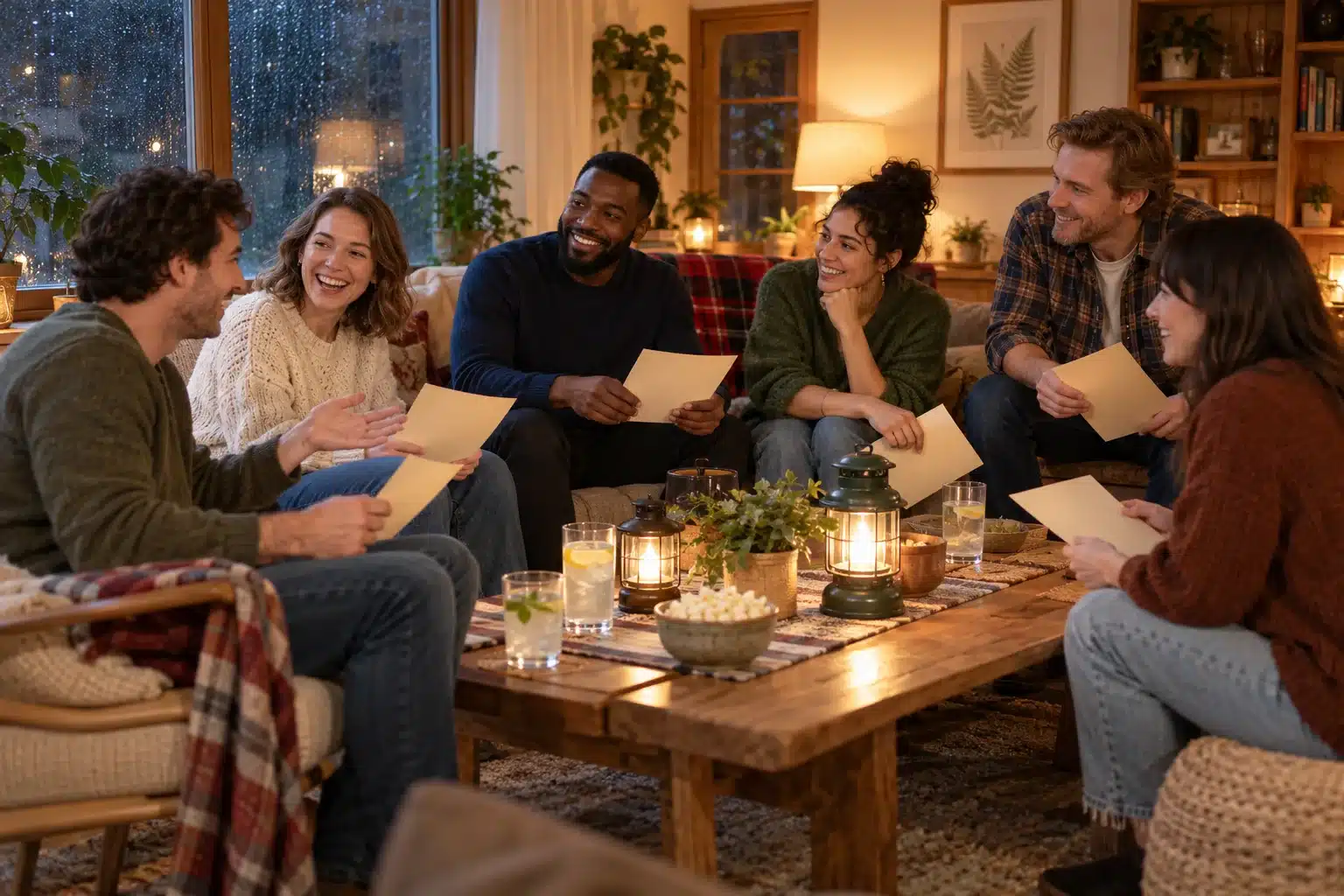
A folded blanket, one or two battery lanterns, and casual clothes can keep the camp theme indoors. Rain does not require a second story or a new set of characters. The fictional setting remains the kit's setting even when the real venue changes.
Compare outdoor and indoor needs
| Need | Backyard arrangement | Indoor equivalent | What to test |
|---|---|---|---|
| Group gathering | Stable chairs around a useful table. | Table, sofa, and chairs arranged for the cast. | Everyone can hear the host and join conversations. |
| Reading light | Battery lanterns and suitable existing outdoor light. | Household lamps plus optional lanterns. | Small print is readable from every seat. |
| Private pages | Plain individual folders on dry surfaces. | The same folders at each person's place. | Materials stay with the correct owner. |
| Shared information | A stable dry surface with permitted holders. | A consistent table or sideboard. | No glare, crowding, or blocked text. |
| Food | An indoor or sheltered service point separate from papers. | The same separate refreshment surface. | Storage and service follow the actual menu. |
| Sound | A compact area with little competing noise. | A room with music low or paused. | Announcements do not need shouting. |
| Comfort | Clothing appropriate to the actual conditions. | Comfortable layers and ordinary seating. | Guests can remain for the complete game. |
| Transfer | One named helper for shared materials. | A prepared receiving surface. | No private files are mixed or pages lost. |
Use the table before buying equipment. A new decorative tent does not solve dim print or a noisy neighboring gathering. Sometimes the most useful improvement is a lamp, another stable chair, or choosing the indoor room from the start.
Test the light at the time you will play
A garden that looks bright at setup can be difficult for reading later. Test a sample page where each guest will sit and where the shared information will be displayed. Use the actual lighting arrangement and check for glare as well as darkness.
Battery lanterns can suggest camp atmosphere without an open fire. Put them where they light the page rather than directly into someone's eyes. A purely decorative imitation fire is optional and should not occupy the surface people need for materials.
A phone torch is an awkward primary lighting plan because guests may also need to hold pages or take notes. Give the room or garden useful shared light first. If you cannot make the text comfortable to read, use the indoor setup.
Avoid adding camp objects that resemble story information. Generic folders, blankets, and lanterns are enough. Decorative maps, coded notes, watches, or suspicious tools can be mistaken for additional clues, so keep the atmosphere separate from the official materials.
Give papers and conversations a stable home
Use individual folders for private materials and a clear storage point between uses. If the edition and print format permit a sleeve, clip, or holder, check that it leaves both sides, small details, and any permitted writing area visible. Preserve the official material rather than redesigning evidence to fit an outdoor prop.
Keep shared items at the designated point and follow the actual access and release instructions. A host should not have to search several garden corners to recover a page. Wind resistance is useful only if it does not make required information harder to inspect.
Arrange chairs in a compact, comfortable area. Guests should not have to cross the whole garden for every conversation or miss an announcement while looking for refreshments. Test the host's voice from the farthest seat and keep music optional.
Agree when the party moves inside
Choose a decision point before arrival and check the actual forecast and conditions for your location. Tell guests how you will communicate a change. This guide does not set a universal weather threshold; use the comfort and practical needs of the actual group and venue.
Move the game inside if rain threatens materials, wind makes pages unmanageable, lighting is inadequate, or people cannot hear or remain comfortable. A prearranged indoor event can also be the right choice before anyone arrives. The theme does not depend on proving that the group can stay outside.
If a move is needed during play, the host should protect required information and follow a supported pause where feasible. Tell everyone what is happening, keep private packets with their owners, and have the materials helper carry shared items together. Practical conditions take priority over keeping a decorative outdoor scene intact.
A simple transfer plan
Ask players to close their own folders and take them inside. The named helper moves the permitted shared materials to the prepared table. Another person handles lamps and refreshments once the group is settled. The host checks that the complete cast and required materials are present before resuming.
Keep the story unchanged. The actual move between garden and living room should not create new fictional travel, an extra alibi, or a different release of information. It is a venue adjustment for the real people playing.
Serve camp-inspired food without constant cooking
For six adults arriving for light refreshments, offer vegetable sandwiches, hummus with carrot and cucumber sticks, bread or crackers, fruit, and a simple sweet such as brownies. Serve water and lemonade. If this is dinner, add a familiar substantial prepared main and size it using the chosen recipe's six-person yield.
These are modern pork-free, alcohol-free menu suggestions. Check wheat in bread, sesame in hummus, and the actual ingredients of brownies, spreads, sauces, and dietary alternatives. Discuss specific needs privately rather than assuming a general label covers the whole meal.
Keeping preparation and service indoors can be easier than moving every dish into the garden. Use a planned refreshment break rather than a buffet that stays out indefinitely. The FDA's buffet guidance reduces the room-temperature limit for perishables to one hour when conditions are above 90°F; follow the full guidance for your actual service and food.
A snack helper can finish serving and storage before returning to play. A real barbecue, fire, or roasting activity is unnecessary to the camp theme and creates another job if the cook is also a required character.

Use an early-evening schedule
This example assumes six adults and a selected edition whose complete game fits a two-and-a-half-hour window. It is a sample planning allocation, not the verified duration of every camp mystery. The actual light, local conditions, and guest needs decide whether the investigation begins outside or inside.
| Time | Plan | Practical check |
|---|---|---|
| 3:30–4:00 p.m. | Test both venues and make the initial outdoor/indoor decision. | Light, sound, seating, conditions, and materials are usable. |
| 4:00–4:30 p.m. | Guests arrive for refreshments. | Complete cast, comfortable clothes, and private packets. |
| 4:30–4:45 p.m. | Finish service and assemble the group. | Shared materials and lighting are ready. |
| 4:45–7:15 p.m. | Complete official game sequence, including permitted breaks, accusations, and reveal. | Host protects the required information and can use the prepared indoor plan. |
| 7:15–7:40 p.m. | Optional awards, photographs, and relaxed conversation. | No private pages appear in photos. |
| After 7:40 p.m. | Clear, collect belongings, and depart as planned. | Folders and shared materials are accounted for. |
If the edition or group needs a longer window, start earlier or extend the event. An outdoor theme is not a reason to rush the official ending before an arbitrary light change. A prepared indoor room gives you a more useful option.
The complete hosting guide covers the underlying file preparation and evening sequence. Finish those essentials before adding optional camp decoration.
Weather fallback checklist
Camping party questions
Do we need a real campfire?
No real fire is needed for this plan. Battery lanterns, casual clothes, and a few simple room details can suggest the setting while keeping reading and conversation central.
Can we play entirely indoors?
Yes, when the selected edition works with your room and cast. Use camp-inspired atmosphere and the official story without pretending the living room changes the fictional evidence.
Should we laminate every page?
Check the edition and how the materials are used before altering their format. Sleeves or holders may help when supported, but they should not hide detail, prevent required writing, or change how information is accessed.
Find the right mystery for your group
Choose by your confirmed players, occasion, and preferred atmosphere. Check the exact edition’s casting and hosting details before preparing your files.
Explore the mystery kits →General planning advice: your exact game edition’s instructions govern casting, information sharing, and the reveal. Illustrative images do not show official evidence or actual customer events.