
03 Choose the format that fits
Printable vs. Boxed Murder Mystery Games: Which Should You Choose?
Compare printable and boxed murder mystery games by delivery, printing, preparation, storage, and guest needs, then use a five-question choice checklist.
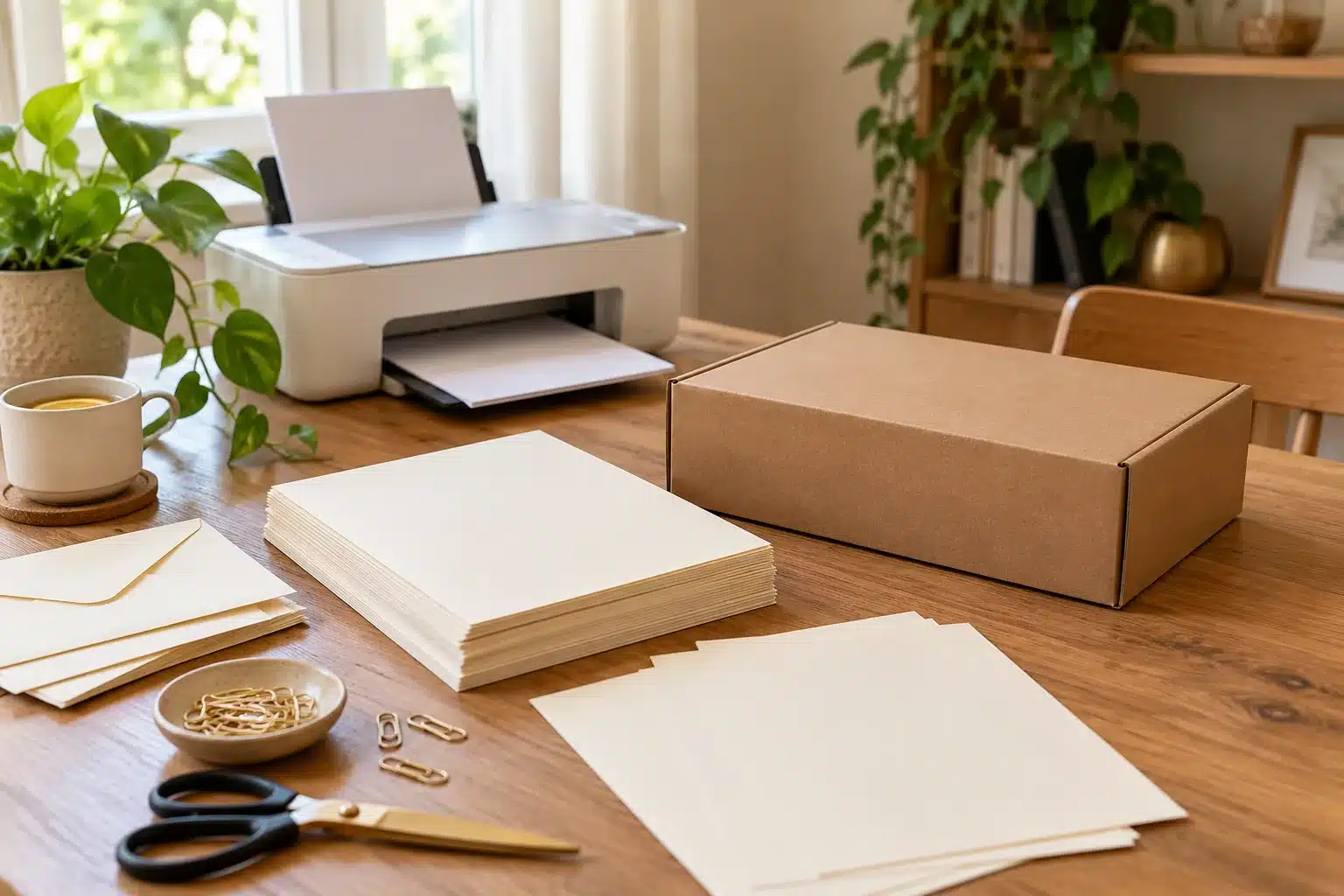
The choice between a printable murder mystery and a boxed version is mostly a choice about delivery, preparation, and the materials you want to handle. It is not a reliable shortcut to judging the story. A carefully organized PDF can make an excellent evening, while a box still needs a host who understands how it works.
Start with the same essentials for both: a suitable cast size, clear instructions, the right content for your group, and a host arrangement you understand. Then compare how the format fits the time, equipment, and space available to you.
What is the practical difference?
A printable game is delivered as digital files. You obtain the materials electronically and prepare them according to the instructions. That may mean printing character booklets, evidence, and ballots, or using permitted files on individual devices. “Digital delivery” does not automatically mean the game runs in a browser.
A boxed game arrives as physical materials. Depending on the particular product, some or much of the printing may already be done. Contents can differ considerably: never assume the box includes audio, props, spare ballots, or every optional role unless the description says so.
Both formats can involve private character information and a solution that must remain concealed. Both may need sorting, invitations, and advance reading. Buying a physical box does not remove the need to learn the preparation rules, and downloading a PDF does not guarantee that you can start immediately.
Compare the formats by what you need
| Decision | Printable format | Boxed format |
|---|---|---|
| Delivery | Files are accessed electronically; check the actual delivery process. | Requires physical availability and delivery or collection. |
| Printing | You arrange any required printing. | Some materials may be preprinted; check the contents. |
| Sorting | You may assemble individual role packets and stage materials. | You still need to identify and organize the supplied components. |
| Last-minute planning | Practical if you can access and prepare the files in time. | Practical only if the right box is already available to you. |
| Reading preferences | Permitted files may offer print or screen options. | Physical format may suit guests who prefer paper. |
| Replacement pages | Reprinting depends on the supplied files and license. | Replacement arrangements depend on the publisher. |
| Storage | Digital originals and any printed material both need organizing. | The box provides a container but needs physical storage. |
| Story quality | Depends on writing, design, and the particular game. | Also depends on writing, design, and the particular game. |
The table describes practical considerations, not features guaranteed by either format. A listing that simply says “boxed” or “downloadable” does not answer the most important questions about how the game plays.
When a printable game makes sense
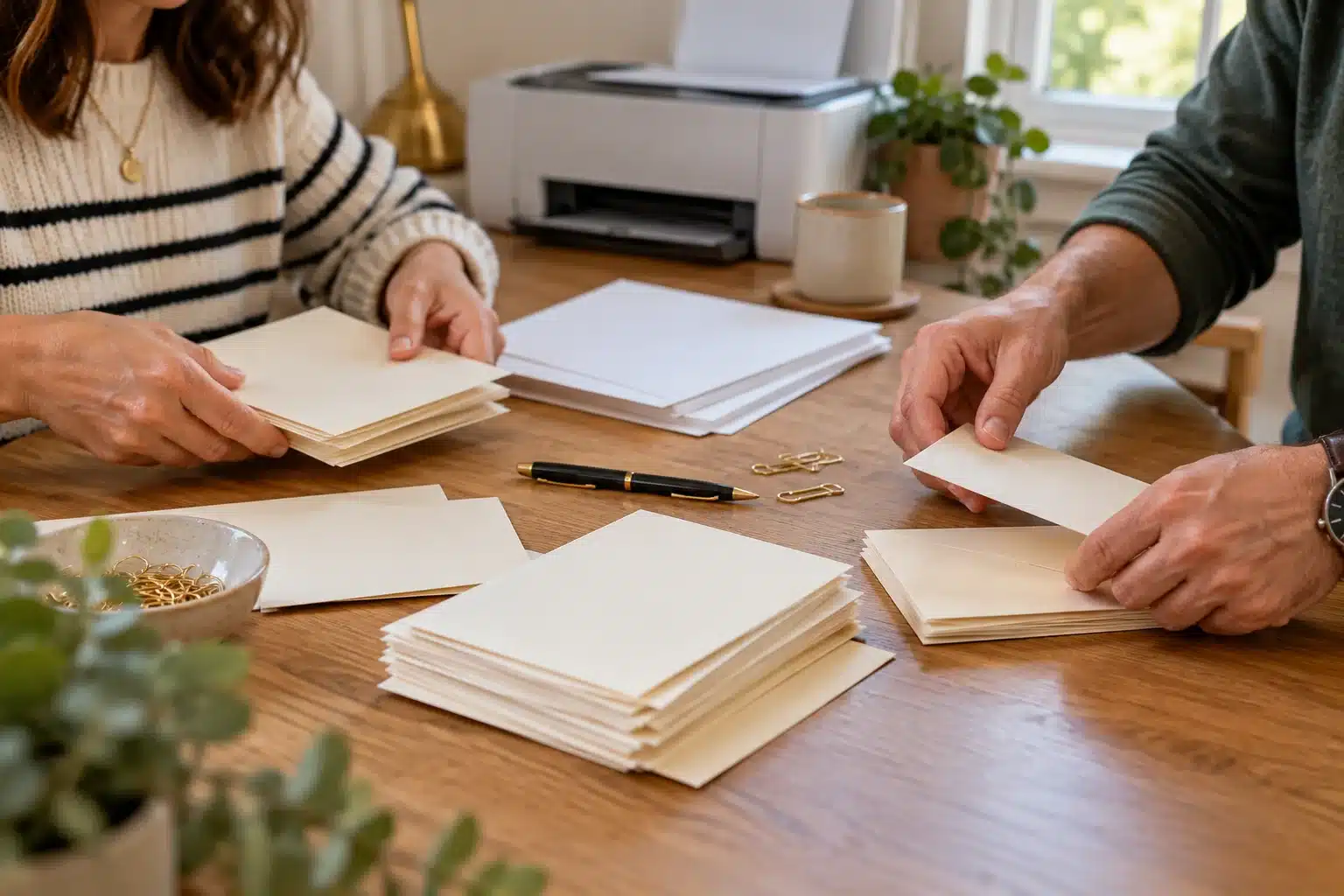
Digital delivery is useful when you want to choose a game without waiting for a physical package. It also lets you prepare the permitted pages in the order that suits your hosting workflow. You might keep your host run sheet in a folder and place each player's materials in a separate envelope.
Printing can be straightforward if you already have access to a reliable printer, paper, and time for a test page. If not, include the effort of arranging printing in your decision. A downloadable file does not print itself, and a queue at a local print service can matter on a tight schedule.
Screen reading can be convenient when the kit explicitly supports it. Check whether each player can open their own private file, whether later sections can stay closed, and whether shared evidence remains easy to inspect. One phone passed around a group is not equivalent to everyone having reliable access.
Think about document privacy too. A family tablet with every role open in different tabs is an avoidable spoiler risk. Give people only the permitted material, and keep answer files out of any shared guest folder.
When a boxed format may suit you
A physical format may appeal if you prefer opening and organizing preproduced materials rather than arranging a print run. It can also be a convenient object to store together, provided the actual pack includes the components your group needs.
Check the edition and supported numbers just as carefully as you would for a PDF. A box intended for a fixed cast is not made flexible by leaving two envelopes unopened. Nor should you assume additional participants can join because there are extra chairs at the table.
Look beyond the package photograph. Is the host's guide clearly described? Does the game require a particular device, an online account, or a working recording? Are ballots consumable? Can you replace anything missing? Those are product-specific questions, not disadvantages you can fairly assign to every boxed game.
If you are choosing a gift, consider what preparation the recipient is happy to do. A format that feels convenient to the buyer may create an unexpected job for the person who hosts. Explain whether you are giving physical materials or access to digital files.
Calculate the work, not just the purchase price
Make a small preparation budget with four headings: game, printing or delivery, food, and optional decoration. Use actual current quotes where needed. Do not assume a printable game is always cheaper after printing, or that a box costs more once delivery is included.
Your time matters as well. Count reading, file organization, printing, packet assembly, and communication with guests. A familiar format may be more manageable than a theoretically faster one you have never used.
Leave optional upgrades until the essentials work. Thick card, elaborate envelopes, professionally printed invitations, and custom props may be attractive, but they are not substitutes for the correct role materials. Your basic preparation workflow should come before decorative finishing touches.
Printing well without overcomplicating it
First check the page-size and print instructions supplied with the game. Print one representative page and inspect small text, margins, and any folding or cutting marks. Do not commit to a full run until that page is readable.
Adobe distinguishes between Fit and Actual size when printing PDFs: Fit adjusts a page to the printable area, while Actual size does not scale it. That means the correct choice depends on the source document and the kit's instructions. If exact dimensions matter, do not change scaling blindly to remove a margin.
Check whether two-sided printing is appropriate. Private information may show through thin paper, and some booklets need a particular page order. If a test sheet is confusing, single-sided pages in a folder can be easier to manage than a badly assembled booklet, provided the kit allows that approach.
The paper and print settings guide offers more general preparation advice. Treat it as supplementary; the exact edition's layout and instructions take priority.
Check accessibility and comfort separately from format
Ask how guests prefer to read and whether they need larger text, a well-lit seat, or access to a device. Digital files may support useful options, but not every PDF is equally accessible or easy to enlarge without losing context. A preprinted booklet may also be difficult for someone to use.
If a required adaptation could affect hidden sections, page order, or evidence, confirm the approach before changing the materials. The goal is for the player to access the intended information without accidentally seeing more than they should.
Neither paper nor a screen compensates for a noisy room. Choose seating, lighting, and a way to view shared material that work for the group. Accessibility is part of the event plan, not a quality automatically guaranteed by a delivery format.

Five questions to choose your format
- When do I need it? Check access time for digital files or actual availability and delivery for a box.
- How will I prepare the materials? Identify a printer, print service, or instructions-compatible screen-reading setup.
- Does this exact game fit the group? Confirm supported participants, content, and reading demands.
- What can the host know? Verify participation and spoiler arrangements before opening the answer material.
- What will preparation really involve? Include sorting, communication, and equipment rather than comparing package prices alone.
If one answer is uncertain, ask the seller a precise question about that edition. “Can four people including me play, and which preparation files can I read without learning the answer?” is much easier to resolve than “Is this easy?”
What Capital of Mystery currently provides
The current shop offers downloadable mystery-party kits. At the time this article was prepared, the site's delivery notice stated that boxed kits were unavailable and that Paddle handles digital downloads only. A generic box shown in an illustration here is not an available Capital of Mystery product.
Check the chosen product page before ordering. Digital access, player ranges, file contents, and the way a host participates should be assessed for the exact game. The home hosting guide can help you turn the chosen format into a practical evening plan.
Common format questions
Is a printable game the same as an online game?
No. Printable describes how materials are supplied and prepared. Some files can be adapted for a video call, while other products run through an app or website. Only use a remote setup the game's instructions support.
Can I reuse either format?
Check the edition's rules and license. Reusing physical components, reprinting consumables, and playing a genuinely different solution are separate questions. Do not infer replayability from whether the materials are paper or digital.
Which format is better for a first-time host?
The one you can prepare reliably for your actual group. Clear instructions, a compatible cast, and an understood host role are more useful selection criteria than the presence or absence of a box. If a current Capital of Mystery listing leaves a practical point unclear, contact the support team before committing to the party plan.
Find the right mystery for your group
Choose by your confirmed players, occasion, and preferred atmosphere. Check the exact edition’s casting and hosting details before preparing your files.
Explore the mystery kits →General planning advice: your exact game edition’s instructions govern casting, information sharing, and the reveal. Illustrative images do not show official evidence or actual customer events.