
30 Welcome guests to a fictional hotel
Haunted Hotel Murder Mystery Party: Turn Your Home Into the Setting
Turn your home into a haunted-hotel setting with a modest reception, readable lounge, easy outfits, food ideas, and a room-by-room preparation checklist.
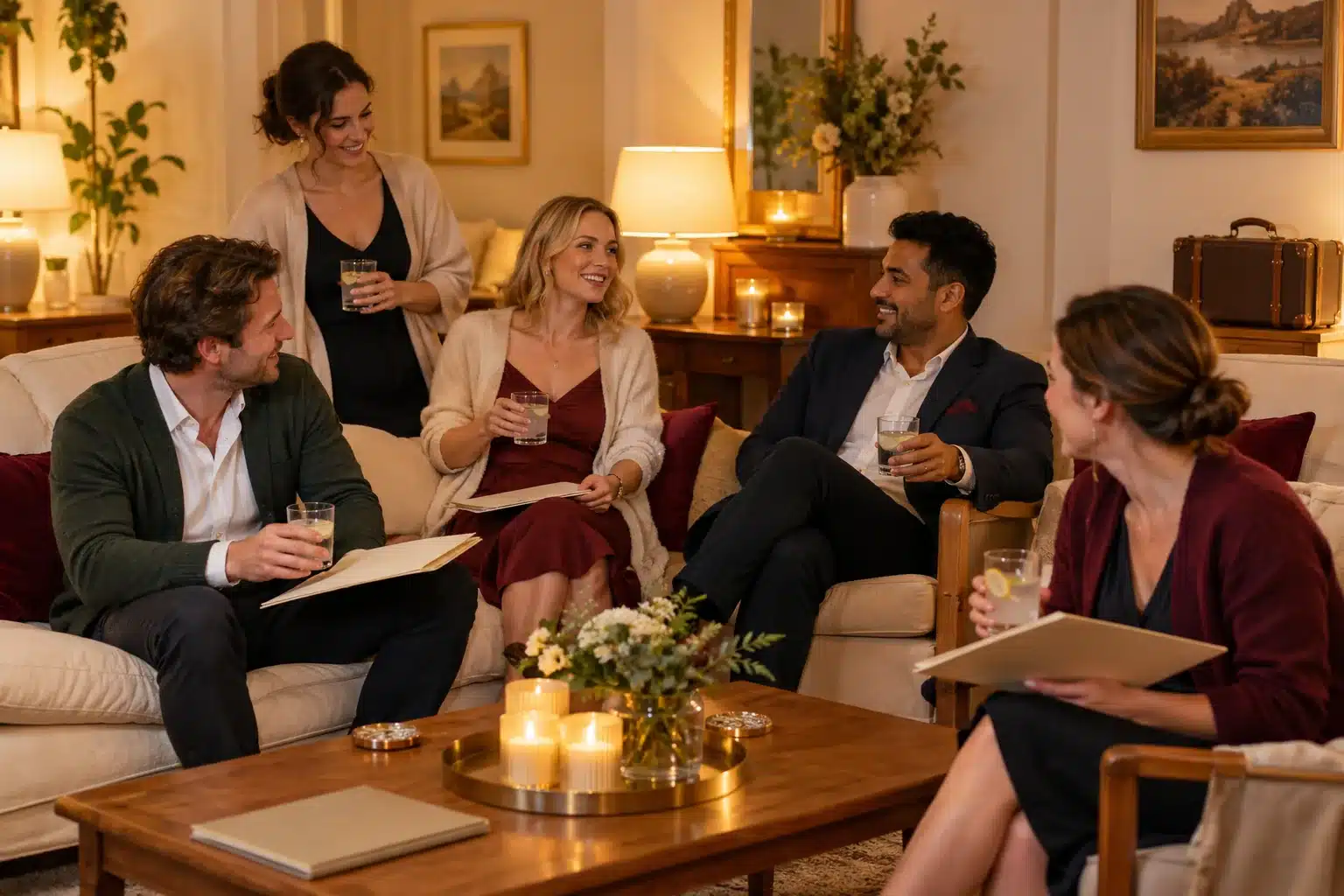
A haunted hotel murder mystery party can start in an ordinary hallway and living room. A small reception surface, a suitcase, warm lamps, simple hotel-inspired clothes, and a prepared meal can make guests feel they have arrived somewhere different. Keep the fictional atmosphere welcoming enough that people can read, talk, and enjoy the complete game.
This guide uses a home as the real venue. The room plan, food, costumes, and decorative props are optional party ideas; the purchased edition supplies its own public setting and official materials. A few thoughtful details can carry the theme without inventing extra clues.
Choose the right level of spooky
Ask guests what kind of atmosphere sounds enjoyable: elegant suspense, a lightly eerie lounge, or simply a hotel dinner with a mystery. Explain the fictional premise and actual content guidance before assigning roles. A comfortable-looking room does not establish the suitability of the story itself.
The current Dinner at the Haunted Hotel game publicly describes the Bellweather Grand Hotel reopening on Halloween night. Use the exact edition's public setting and character guidance when preparing invitations. Keep private guest information, evidence, and the solution within the official game.
Confirm the supported active cast and host arrangement. Hosting and investigating without advance solution knowledge are separate questions to check before opening files. The group-size guide can help organize that preparation, while the actual edition determines the role selection.
Give each part of the home a useful job
Choose one welcome point, one main conversation room, one dry shared-information surface, and one food surface. They can all be close together. A small home does not need separate rooms for a reception, ballroom, dining hall, and investigation wing.
The most useful test is whether guests understand where to arrive, where to put belongings, where to hear instructions, and where the permitted materials are. Atmosphere can then sit around those functions rather than forcing everyone to navigate a theatrical route.
| Real area | Hotel-inspired job | Useful setup | Keep clear |
|---|---|---|---|
| Hall or entrance | Reception and welcome. | Small console, lamp, public welcome card, and a place for coats. | Walking route, door movement, and private packets. |
| Living room | Hotel lounge. | Comfortable seats, warm lamps, and a low decorative detail. | Sightlines, conversation space, and readable pages. |
| Dining table or side table | Shared-information point. | Dry surface and the edition's permitted materials. | Food, spills, and optional props that resemble clues. |
| Sideboard or kitchen counter | Refreshment service. | Prepared food, drinks, ingredient information, and utensils. | Investigation papers and personal bags. |
| One optional corner | Arrival or post-game photographs. | Plain backdrop, empty suitcase, or familiar chair. | Exits and any official evidence. |
Make a modest reception desk
Use a narrow console, small table, or cleared shelf that already fits the hallway. Add a shaded lamp, one plainly decorative welcome card, and perhaps a bell if you own one. A reception point should help arrivals rather than become a puzzle they must solve before entering.
An empty suitcase tucked to the side can suggest travel. Keep it out of the route and make its decorative purpose clear. Guests should not need to open personal bags or search household drawers to participate in the mystery.
A room-number sign can work as a photo-corner decoration, provided it is clearly separate from the game's actual locations and information. Use official public setting guidance for any meaningful story sign. Avoid attaching invented numbers or messages to official materials or implying a decorative door is an evidence station.
Do not create a guest ledger filled with secrets, coded room assignments, or suspicious dates. Those details can look convincing enough to become false leads. Ordinary practical labels such as coats and refreshments are more useful for the real home.
Build a lounge people can read in
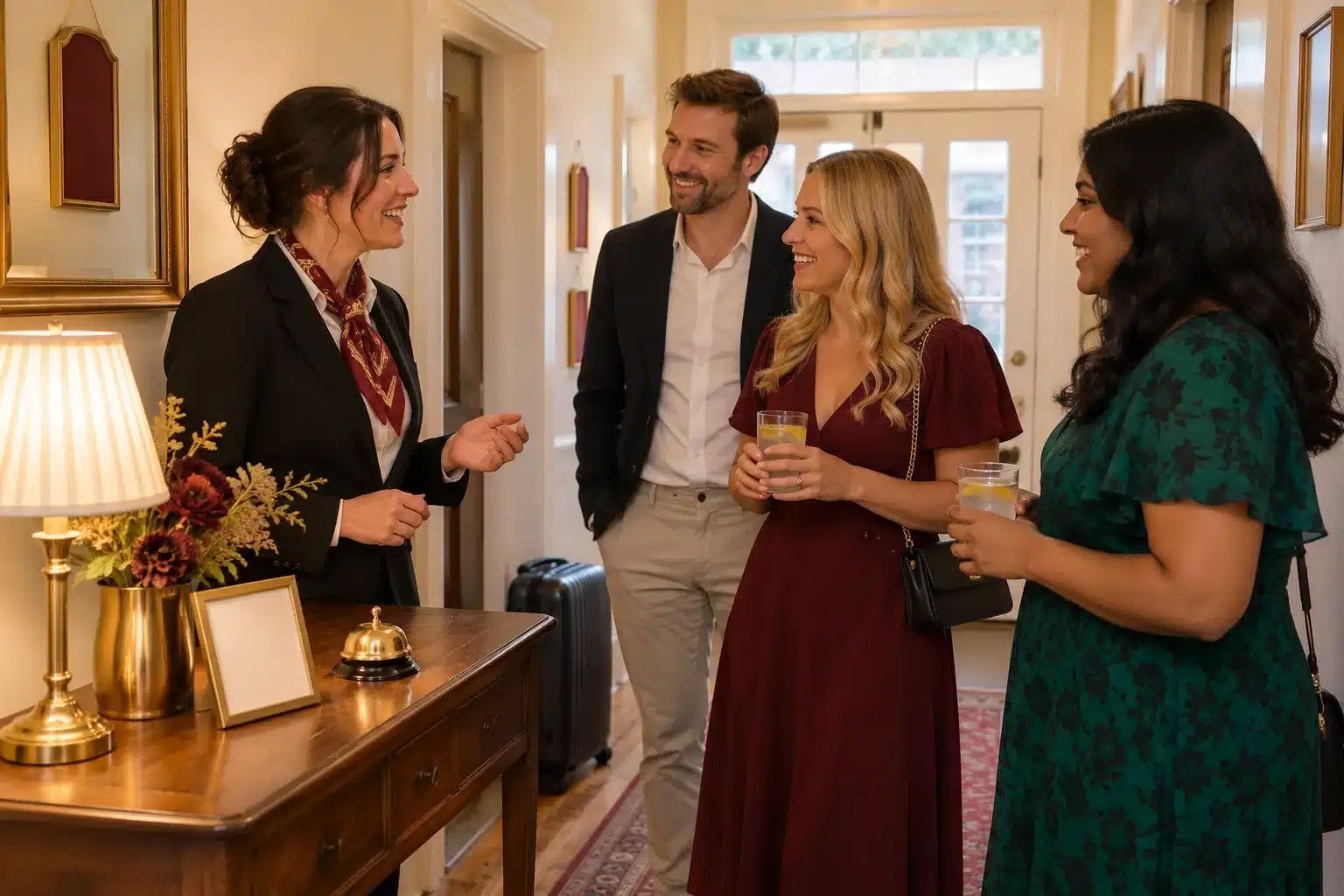
Use the existing sofa and stable chairs, with a useful place to put a folder or notes. Burgundy, cream, and muted gold can suggest an older hotel through cushions or a runner you already own. A few existing books or plain frames can remain ordinary background decoration.
Warm household lamps provide a comfortable atmosphere and useful light. If you want a candlelit effect, the U.S. Fire Administration recommends considering battery-operated flameless candles. Test the actual printed materials from every seat instead of relying on a room that only looks atmospheric in photographs.
Keep sound restrained. A quiet instrumental queue can accompany arrivals or dinner; lower it for investigation and pause it for narration and the reveal. Creaking-door effects, sudden screams, flashing lights, or surprise intruders are unnecessary and may make the event less comfortable for guests.
Offer the same story in a brighter room for people who prefer minimal scares. Agree that version before the party rather than waiting for someone to be uncomfortable. Changing real lighting and sound need not change the fictional setting or information.
Separate essential materials from optional hotel props
Prepare the official kit first. Each private packet needs the correct recipient; shared materials need the correct preparation and release; the host needs the permitted instructions. Decorative success cannot make up for a missing required role or a page sent to the wrong guest.
| Item | Essential or optional? | How to use it |
|---|---|---|
| Supported active cast | Essential. | Follow the exact edition's casting and attendance instructions. |
| Private role material | Essential as specified by the edition. | Deliver only to the assigned person at the permitted stage. |
| Shared information and ballots | Essential as specified by the edition. | Preserve the official contents and access rules. |
| Host instructions | Essential. | Confirm preparation, participation, and solution knowledge. |
| Useful lighting and seats | Essential to this home plan. | Test reading, hearing, and comfortable conversation. |
| Bell and empty suitcase | Optional decoration. | Keep separate from official information and clear of routes. |
| Plain room-number shape | Optional photo detail. | Make its decorative purpose clear; use no invented story meaning. |
| Welcome card and fabric runner | Optional decoration. | Suggest reception without creating a new clue. |
| Photo corner | Optional. | Use before play or after the reveal, with consent. |
This distinction also makes shopping easier. Prepare the real materials and solve seating or lighting needs first. Add one or two props only if they contribute to the atmosphere without giving the host another job.
Give guests easy hotel-inspired outfits
A hotel guest can wear a familiar dress, blazer, cardigan, smart shirt, or comfortable separates. A traveler-inspired look can use a scarf or small ordinary bag. A staff-inspired outfit can use a plain shirt with dark trousers or a simple jacket, following public character guidance where supplied.
Keep the suggestions flexible. People should be able to sit, move, and handle pages without managing theatrical clothing or buying a uniform. Avoid using a hidden character secret as the reason someone must wear or carry a particular object.
Give an ordinary-clothing alternative in the invitation. A small accessory or a color choice can be enough for a guest who likes the story but does not want to dress up. State whether costumes are optional so people do not feel underprepared when they arrive.
Serve a modern hotel-supper menu
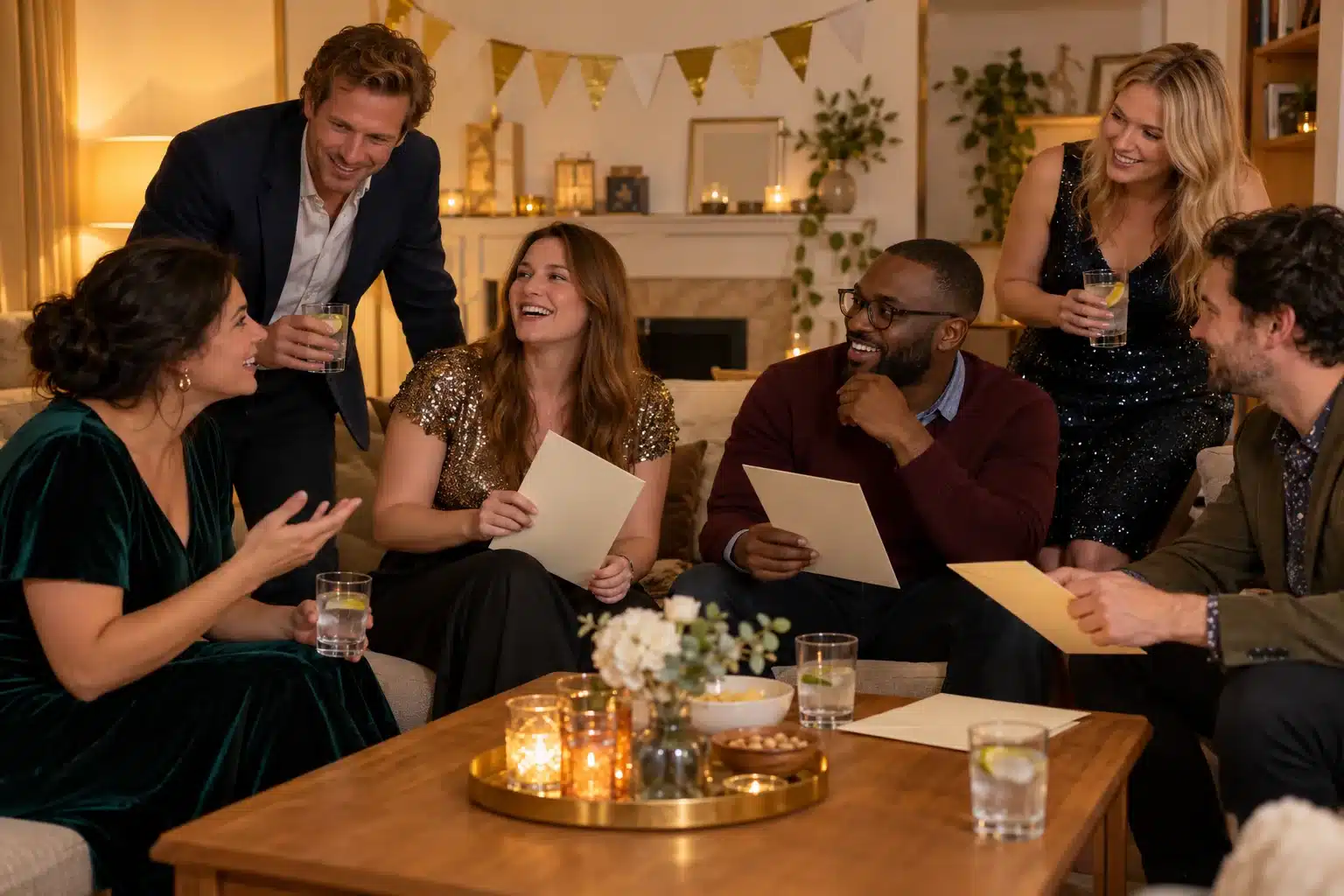
For eight adults, a practical home menu is a prepared vegetable pasta bake, mixed salad, bread, fruit, and small brownie squares. A lighter lounge version could use vegetable sandwiches, hummus, vegetables, crackers, and fruit. Choose one format and describe it clearly in the invitation.
Use the main recipe's actual eight-person yield as the starting point, then adjust sides and dessert for the group. These are original menu suggestions, not tested recipes or a claim about food included with the kit. The meal does not need to reproduce a fictional hotel menu.
Keep drinks alcohol-free: water, cucumber lemonade, and a berry-and-citrus spritz offer simple choices. Ask about ingredients and practical needs in advance. Check wheat in pasta and bread, milk in cheese, sesame in hummus, and the actual dessert and sauce recipes for other requirements.
Serve before the game or at a break the edition permits. The FDA's buffet guidance explains replacing platters and appropriate hot or cold holding. Give a named helper the food plan so the host can remain available for the investigation.
Plan the arrival without adding gameplay
Welcome people at the reception surface, take coats, confirm the full cast, and direct guests to refreshments. Keep any check-in list private and practical. A public welcome should not expose a role assignment or give one guest extra story information.
After food, clear and store what needs storing, give everyone a comfort break, then assemble the complete cast for the official introduction. The optional hotel atmosphere can remain in the room while the host follows the actual instructions.
If somebody arrives late or cancels, check the affected role and supported options before starting. A hotel theme does not make empty roles automatically optional. Contact support when the edition leaves the arrangement unclear rather than assigning a guest two private identities.
The complete home-hosting guide covers the wider sequence from preparation through the reveal. Add photographs and awards after the complete ending, or at another point expressly supported by the edition, so the party extras do not interrupt required information.
A room-by-room final check
Haunted hotel questions
Do we need to make the room dark?
Use useful reading light and the atmosphere agreed with the guests. Warm lamps and a few restrained details can suggest an eerie lounge while keeping participation comfortable.
Can the game be played outside Halloween?
Check the actual edition and the public setting you want to present. A real calendar date does not require rewriting the fictional Halloween reopening in the linked game's premise.
Should guests search every suitcase and drawer?
Use only the access and investigation arrangements in the chosen edition. Household belongings and decorative luggage should not become additional evidence or a reason to search private spaces.
Find the right mystery for your group
Choose by your confirmed players, occasion, and preferred atmosphere. Check the exact edition’s casting and hosting details before preparing your files.
Explore the mystery kits →General planning advice: your exact game edition’s instructions govern casting, information sharing, and the reveal. Illustrative images do not show official evidence or actual customer events.