
27 Turn dinner into a castle banquet
Medieval Murder Mystery Party: A Castle Banquet Hosting Guide
Create a medieval-inspired mystery banquet at home with easy costumes, a low-effort comparison table, a modern feast, a schedule, and a setup checklist.
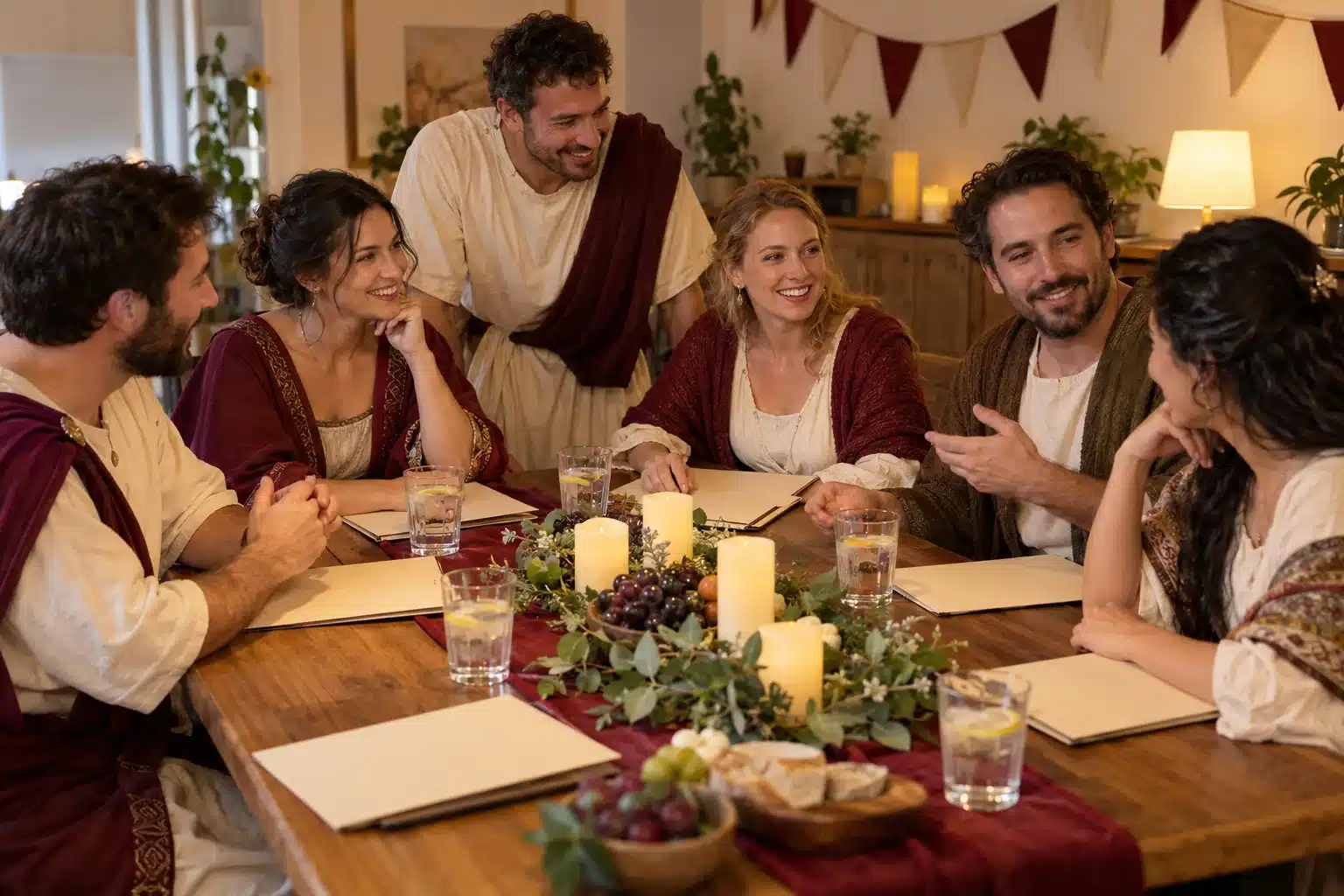
A medieval murder mystery party can begin with the dining room you already have. A fabric runner, simple pennants, useful lamps, comfortable clothing, and a prepared feast can suggest a castle banquet without turning the house into a stage set. Leave room for the parts that make the game enjoyable: reading, conversation, and a complete ending.
This guide offers modern medieval-inspired party ideas, not an exact reconstruction of a particular household or century. The food, costume shortcuts, supply plan, and filled schedule are practical suggestions to adapt around the purchased game's instructions.
Let the public story define the evening
The current Medieval Castle Banquet game, Feast of Shadows, publicly places its story at a royal winter banquet at Greywatch Keep. That gives your guests a shared picture of the setting. Keep the official premise, character names, and sequence with the exact edition rather than inventing a new court history to explain the room.
Read the public content and preparation guidance before inviting people. A historical setting does not settle the level of suspense, reading demands, or the host's role. Confirm the active cast, how the host participates, and whether the group can finish within the time you have available.
A four-person table needs the same care about the host arrangement as a larger banquet. Do not add an extra person by assumption or promise spoiler-free preparation without checking. The group-size guide helps you organize those questions before casting.
Borrow the idea of a hall, not a whole castle
English Heritage's account of life at Goodrich Castle describes the great hall as a setting for feasts and household gatherings. That offers a useful broad reference for a shared dining focus. It does not mean a modern home needs to reproduce the historical household's seating hierarchy or service.
Build one room around a useful table and comfortable conversation space. Existing wood, plain ceramic dishes, a cream cloth, and a burgundy or forest-green runner can suggest the mood. Leave the rest of the house ordinary unless another area has a clear practical job.
A small welcome surface can hold coats, public name cards where permitted, and arrival information. Keep private packets controlled rather than placing every character's pages in an open pile. A separate sideboard can hold food while the central table remains dry.
Give decoration one clear job
Use plain pennants for color, a low arrangement for the table, and battery candles for an optional glow. The U.S. Fire Administration recommends considering flameless battery-operated candles. Keep useful household lighting too; atmosphere should still let guests read and see one another comfortably.
Choose generic geometric or botanical motifs instead of copying a real coat of arms and claiming a historical connection. Decorations need not introduce a secret message. Let the game's actual evidence remain the material guests investigate.
Choose your effort level before shopping
Decide how much optional styling you want and tell guests early. A modest meal with wardrobe-based outfits can be a complete party. More elaborate decoration is worthwhile only if making it is part of the enjoyment and the practical game setup is already finished.
| Area | Low-effort approach | More elaborate optional approach | Keep practical |
|---|---|---|---|
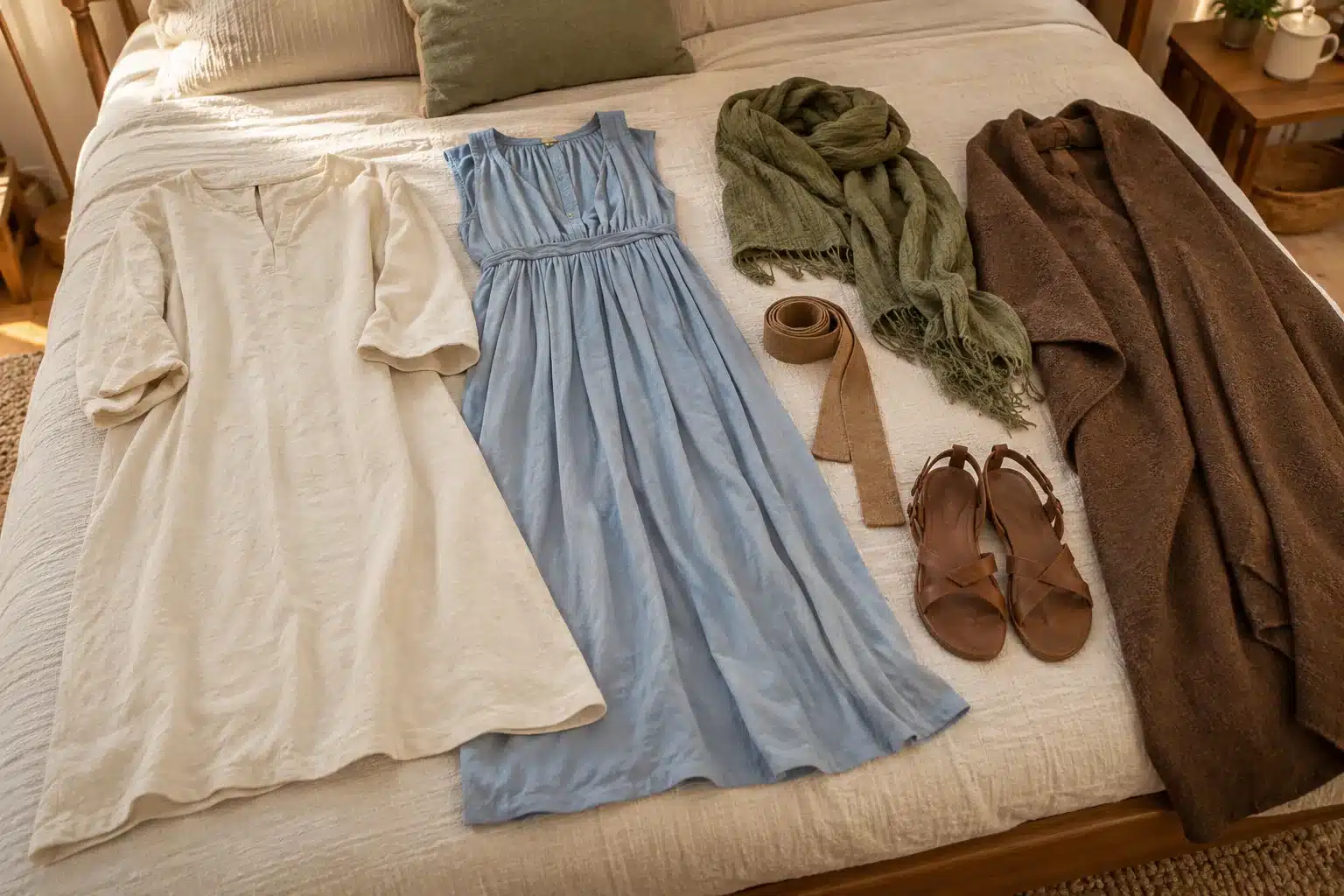
| Outfit | Plain long top or dress with a scarf or wrap. | Borrowed tunic-shaped garment, simple cloak, or soft cap. | Comfortable movement and seating. |
| Footwear | Familiar flat shoes or comfortable boots. | A coordinated pair already owned. | Suitable for the floor and guest. |
| Table | Existing cloth, plain plates, and ordinary cutlery. | One coordinated runner and low ceramic serving dishes. | Space for notes and shared materials. |
| Wall detail | A short plain pennant garland. | Reusable fabric bunting in two colors. | No clues, names, or claims of authentic heraldry. |
| Lighting | Existing lamps. | A few battery candles added to the lamps. | Readability from every seat. |
| Main meal | One prepared stew, bread, and vegetables. | A second main with a named kitchen helper. | Service finishes before required game activity. |
| Music | A short quiet instrumental queue. | A longer queue checked for abrupt volume changes. | Easy to pause for narration and reveal. |
| Photographs | One clear corner after the game. | A plain fabric backdrop and shared accessories. | Optional, with private pages out of frame. |
Make costumes people can sit in
A plain long dress with a shawl is a useful starting point. So is a long shirt over comfortable trousers with a soft belt. A cardigan or simple wrap can suggest a layered outfit without requiring sewing or buying a costume.
Guests who want more detail can borrow a tunic-shaped garment or add a small soft cap. Keep suggestions flexible across body types and gender expression. One person may enjoy a full outfit while another prefers an ordinary shirt with a themed scarf; the invitation can make both levels welcome.
Check hems, sleeves, warmth, and footwear before the day. A long loose sleeve can be inconvenient around food or paper, and an outfit that looks good standing may be uncomfortable at the table. Ask guests to bring a familiar layer if they expect to stay late.
Use public role guidance for any specific request. Hidden character information should not determine a costume clue, and a real guest's personality should not dictate who gets a noble or servant-inspired outfit. The official cast and each person's preferences come first.
Serve a modern feast with a manageable workload
For eight adults, this example menu uses lentil-and-chickpea stew with root vegetables, roast carrots and potatoes, bread rolls, a green salad, and baked apples. Offer still water and an alcohol-free apple-and-cinnamon drink. The dishes are contemporary suggestions chosen for a warm banquet atmosphere, not authenticated medieval recipes.
Use your chosen stew recipe's eight-person yield as the main-meal starting point. Plan eight dessert portions and shared sides, adjusting for appetite and dietary alternatives. A party shopping list should come from those actual recipes rather than guessed cooking times or a promise that one pan will feed any group.
For guests who want another main, prepared roast chicken can be an option. Count the people choosing each dish before buying and make sure the kitchen can handle the extra service. A single substantial vegetarian main is often easier when the organizer is also a player.
Check bread for wheat, stock for its actual ingredients, and dessert toppings for milk or nuts. A vegetable stew is not automatically appropriate for every allergy or dietary requirement. Keep ingredient information available and discuss specific arrangements privately with the person concerned.

Prepare the feast before the fiction begins
Choose familiar recipes with a service plan you understand. Finish the room before food preparation occupies the surfaces. Put serving utensils, plates, water, and containers where the food helper can find them without asking the host during play.
If you serve a buffet, use the FDA's guidance on hot and cold holding for the actual dishes and equipment. A decorative bowl or a covered platter is not itself a storage method. Give service and clearing a named owner so the game host can remain available.
Serve the meal before play or at a break supported by the edition. Keep the real dinner separate from story events: guests should follow the official narration rather than treating a dish's arrival as new evidence.
Use a meal-first banquet schedule
This example assumes eight adults and a selected edition whose complete game fits a two-and-a-half-hour window. It is an illustrative household timetable, not the advertised duration of every medieval mystery. Check the fit before adopting it.
| Time | Activity | Preparation responsibility |
|---|---|---|
| 5:00–5:30 p.m. | Arrivals, drinks, and optional outfit photographs. | Organizer welcomes the complete cast. |
| 5:30–6:15 p.m. | Prepared feast. | Kitchen helper manages serving. |
| 6:15–6:35 p.m. | Clear, store food appropriately, and take a comfort break. | Agreed helpers reset the room. |
| 6:35–6:45 p.m. | Return materials to the right people and settle. | Host checks readiness. |
| 6:45–9:15 p.m. | Complete official sequence through accusations and reveal, including permitted pauses. | Host and active cast follow the edition. |
| 9:15–9:40 p.m. | Optional awards, dessert if not already served, and relaxed conversation. | Food helper and organizer. |
If dessert needs a separate service, choose a supported point or extend the timetable. Keep a realistic finish for guests with travel or other commitments. Optional photographs and long award speeches can move more easily than the required investigation.
Arrange sound and shared materials
Quiet acoustic or early-music-inspired instrumentals can support arrivals and dinner. Preview the actual recordings for vocals, sudden changes, or loud effects. Call modern medieval-inspired music what it is rather than promising that every recording recreates the game's period.
Turn music down or off while the host explains the format and during the reveal. Check the farthest seat and any quieter conversation area. A small speaker can be useful; a loud battle soundtrack or dramatic sound cue is unnecessary.
Keep shared information at a stable, well-lit surface. Use the official release and reading instructions, with ordinary folders or trays as organization rather than invented props. The main hosting guide covers the wider file preparation and game-night process.
Banquet setup checklist
Medieval banquet questions
Do we need a long table or benches?
Use furniture that fits the actual room and guests. The historical hall reference supplies atmosphere; comfortable supported participation matters more than reproducing its furniture or social hierarchy.
Are these authentic medieval recipes?
The menu is a modern party adaptation. It is designed to be practical and cohesive, without claiming that the dishes reconstruct the fictional banquet's exact historical food.
Can guests wear fantasy armor?
Set the public costume expectations before inviting people. Simple clothes are easier for an ordinary home, and a late-medieval-inspired banquet does not require fantasy equipment or realistic weapon props.
Find the right mystery for your group
Choose by your confirmed players, occasion, and preferred atmosphere. Check the exact edition’s casting and hosting details before preparing your files.
Explore the mystery kits →General planning advice: your exact game edition’s instructions govern casting, information sharing, and the reveal. Illustrative images do not show official evidence or actual customer events.