
21 Give dinner and the game time
Thanksgiving Murder Mystery Party: A Step-by-Step Hosting Guide
Plan a Thanksgiving murder mystery party with a filled meal-and-game schedule, kitchen responsibilities, a seasonal menu, and a practical host checklist.
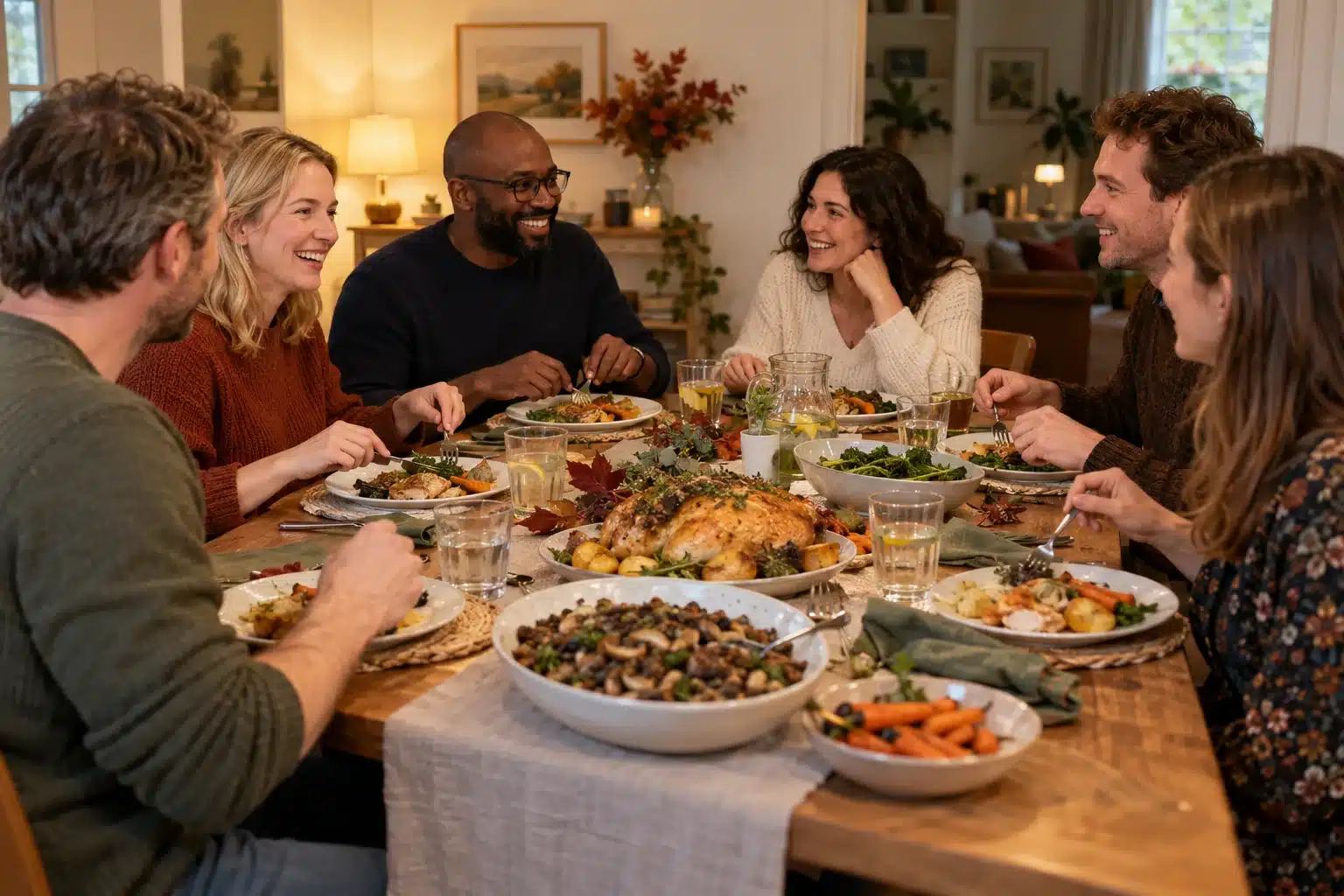
A Thanksgiving murder mystery party works best when the meal and the investigation each have a clear place in the day. Guests can enjoy dinner, the cook can sit down, and the game can begin with everyone ready to listen. The most useful preparation is deciding who handles the kitchen while the story is underway.
This guide uses an eight-adult home gathering as a planning example. The menu, responsibilities, and times are suggestions you can adapt. Your chosen edition determines the required cast, preparation, game sequence, and whether the host can also play.
Choose a meal-first or course-by-course format
For a first attempt, serving the main meal before the game is a practical choice. You can finish cooking, clear the table, store leftovers, and give guests a proper introduction without watching the oven. Dessert can come before the briefing or at an approved break.
Playing between courses can work when the edition's instructions allow suitable pauses and another person manages service. It requires more coordination: guests must know when to put materials aside, the cook needs a reliable serving point, and every player must hear the same announcements.
| Format | What the host gains | What needs planning | A useful fit |
|---|---|---|---|
| Meal first, complete game afterward | A clear end to kitchen work before play. | Enough afternoon or evening time after clearing. | A household with one main cook or several first-time players. |
| Courses around permitted pauses | A longer dinner-party atmosphere. | A food lead, supported break points, and reliable service. | A group whose chosen edition and kitchen arrangement support it. |
Give the whole game an uninterrupted window when you are unsure. A finished meal is easier to move by fifteen minutes than a required character's participation. If the available day is too short, choose another date or a compatible format before distributing roles.
Pick the story for the people attending
Start with confirmed active players, the group's content preferences, and the host arrangement. A Thanksgiving theme can look cozy while still involving fictional family tensions or mature topics. Read the public description and ask about anything that could affect the group.
The current Thanksgiving Family-Dinner game, Turkey, Tension & Tragedy, offers a holiday-household setting to examine. For a different autumn atmosphere, compare the Cozy Thanksgiving Farm mystery. The setting helps you choose the mood; the exact edition's instructions establish which roles to use and how to prepare.
Avoid casting through real family relationships. A confident relative does not automatically need the most prominent character, and a fictional disagreement should not be treated as a joke about actual guests. Ask privately about reading, conversation, and costume preferences, then make supported assignments.
If you are considering a four-person celebration, establish whether one of those four may host. Playing host and investigating without knowing the answer are separate arrangements. The group-size planning guide is a useful starting point before you finalize invitations.
Send two kinds of information in advance
The public invitation should explain arrival, meal time, game start, approximate finish, costume expectations, and the RSVP deadline. Mention whether people are attending both the meal and the full game. This matters when some relatives normally arrive late or leave after dessert.
Private character information should go only to the assigned person, using the files and reading stages permitted by the edition. Send it after attendance is confirmed, and keep the full download folder out of the group chat. Record which person received which role so a last-minute change is easier to resolve.
Here is an original message you can adapt after filling in the real details:
Add a precise potluck request if guests are contributing. “Bring one prepared vegetable side for eight, ready to serve at 3:00” gives the kitchen lead more useful information than “bring whatever you like.” Check storage and equipment needs before accepting the dish.
Split kitchen work from game work
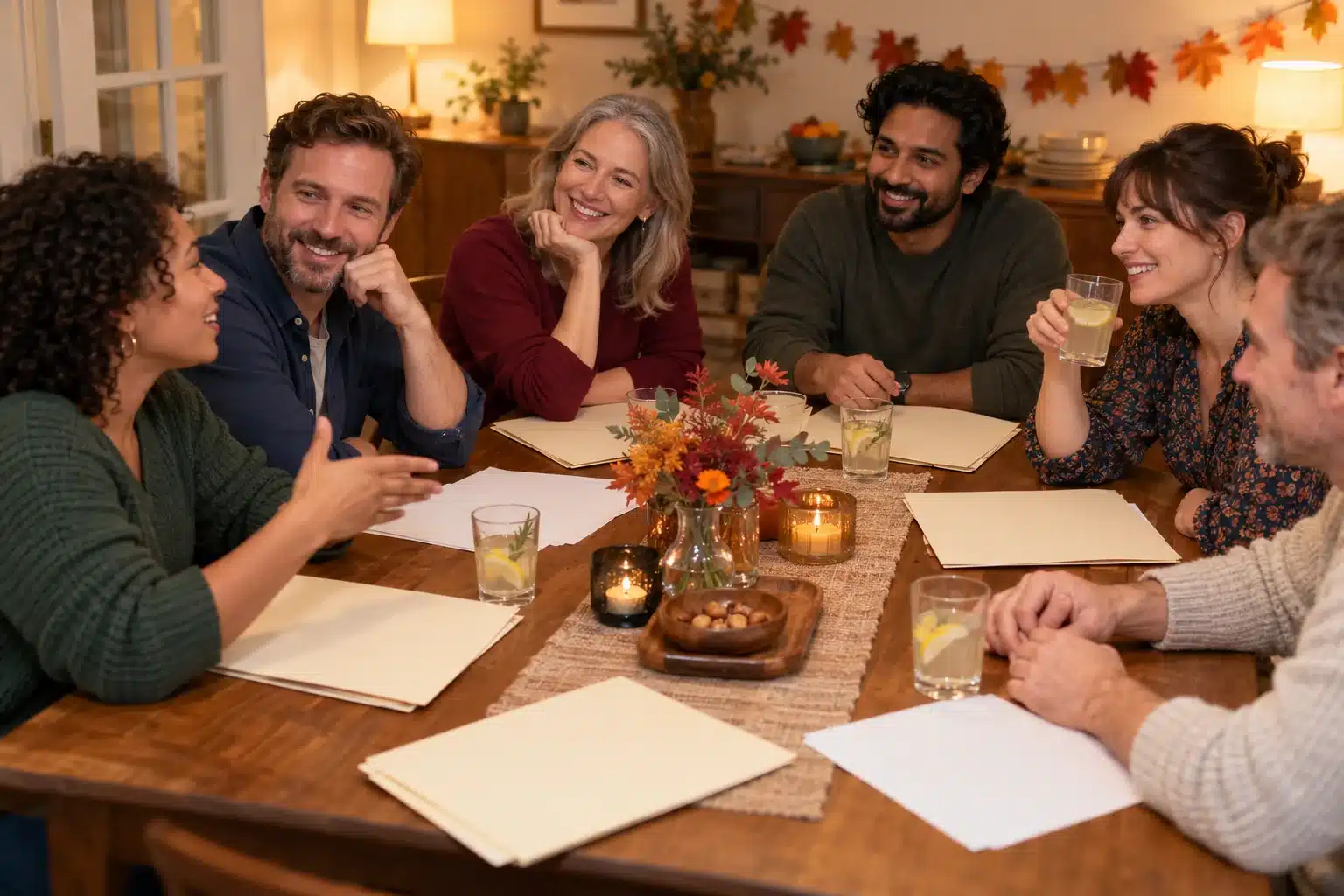
One person can organize the party without doing every task. Ask two or three guests for specific jobs they are comfortable accepting. A helper can contribute to food or clearing while remaining a player, provided their task finishes before they are needed in the investigation.
| Responsibility | Named owner in this example | Finish or handover point | Practical boundary |
|---|---|---|---|
| Game preparation and role delivery | Organizer Alex | Before the day. | Keeps private files and answer-bearing material controlled. |
| Main meal and serving plan | Kitchen lead Sam | Main service at 3:00 p.m. | Uses chosen recipes and food-storage arrangements. |
| Drinks and agreed dietary alternatives | Guest Morgan | Before people sit down. | Keeps ingredient information with the food. |
| Clearing and leftover storage | Alex and guest Casey | Before the briefing. | Leaves no hot dishes or food work waiting during play. |
| Table reset and pencils | Guest Jordan | By 4:10 p.m. | Returns private materials to the correct places. |
| Game announcements | The edition's designated host | Throughout the official sequence. | Other people finish kitchen tasks before this window. |
These names are illustrative, and two jobs may belong to one person. The useful distinction is between work that must happen before play and work that would repeatedly pull someone out of it. Change the menu if the kitchen plan still depends on constant attention.
Make a seasonal meal that fits the workload
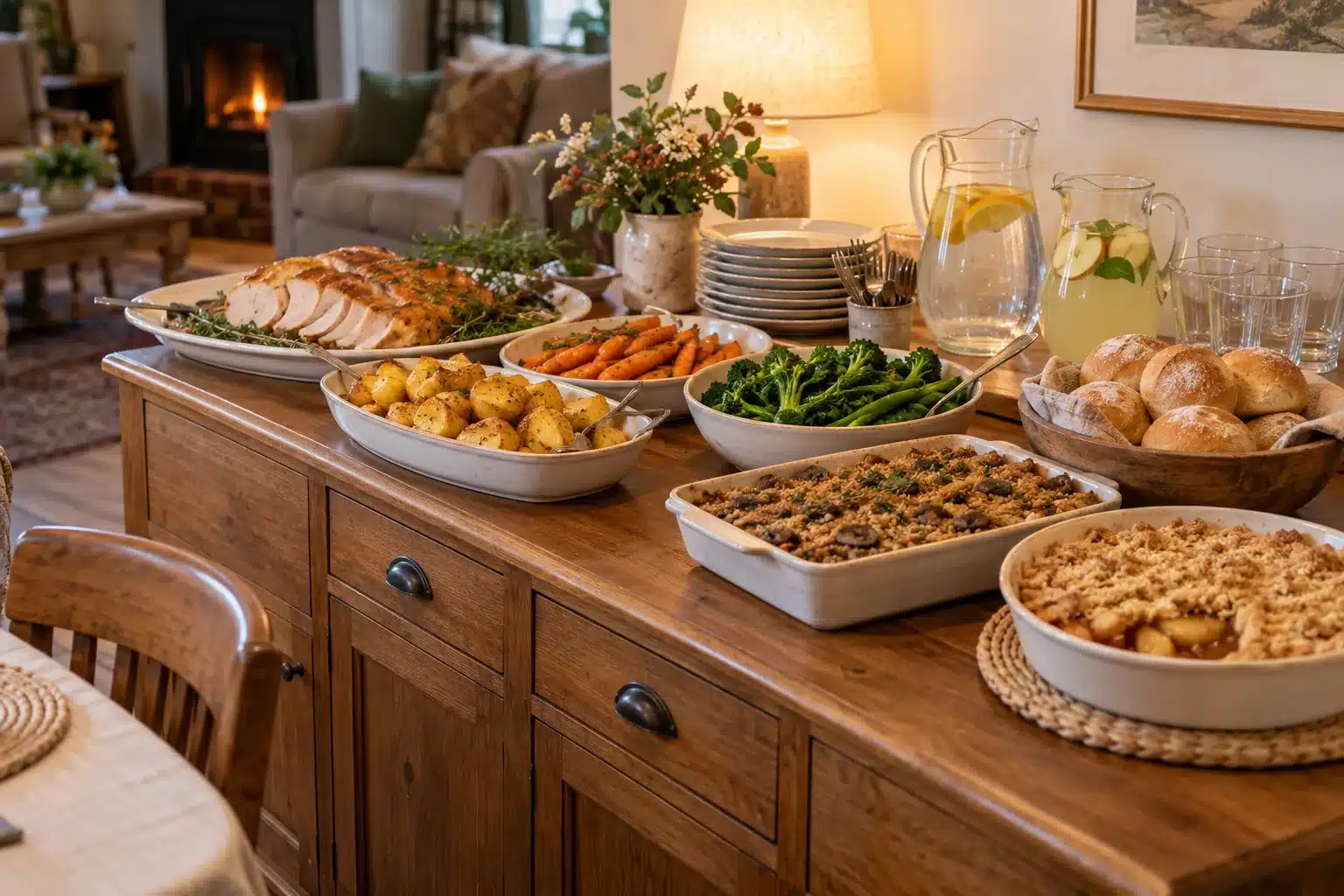
Choose familiar food and a small number of serving dishes. For this eight-adult example, the menu is roast turkey, roast potatoes and carrots, green vegetables, bread rolls, and apple crumble. A mushroom-and-lentil bake offers a substantial vegetarian main. Serve water and an alcohol-free apple-and-citrus drink.
Treat the vegetarian main as a planned dish with its own portions and utensils. Check the recipes for wheat, milk, eggs, celery, nuts, or other ingredients relevant to your guests. A mushroom bake is not automatically dairy-free, and a vegetable side may contain butter or stock that changes its suitability.
For a shopping plan, count eight main-meal portions divided between the chosen mains, eight dessert portions, and enough sides for the whole group. Record the number choosing each main before buying. This portion plan is an estimate, not a tested recipe or a universal quantity rule; your recipes and guests' appetites determine the final amounts.
Use a food thermometer and an authoritative cooking reference. FoodSafety.gov's temperature chart lists 165°F/74°C for turkey and other poultry. Follow the full guidance and the recipe for checking the appropriate parts of your actual dish.
The kitchen handover should include leftover storage. FoodSafety.gov's Thanksgiving guidance recommends prompt storage within two hours and smaller shallow containers for quicker cooling. Build that job into the meal plan so food is not left waiting while everyone becomes absorbed in the mystery.
Use this filled meal-and-game schedule
This example assumes eight adults, a meal-first format, and a selected edition whose complete game fits a two-and-a-half-hour window. The window includes any pauses permitted by that edition. It is a planning assumption, not a promised duration for every kit.
| Time | What happens | Who is responsible |
|---|---|---|
| 2:30–3:00 p.m. | Arrivals, drinks, coats, and a check that all active players are present. | Organizer and drinks helper. |
| 3:00–3:45 p.m. | Thanksgiving meal, with no game instructions competing with service. | Kitchen lead and the whole table. |
| 3:45–4:10 p.m. | Clear, store leftovers, reset the dry game surface, and take a comfort break. | Assigned helpers. |
| 4:10–4:15 p.m. | Everyone returns with the correct permitted materials. | Host. |
| 4:15–6:45 p.m. | Complete official game sequence, including its introduction, permitted breaks, accusations, and reveal. | Host and every required player. |
| 6:45–7:00 p.m. | Optional awards, photographs, and a final check on belongings. | Organizer. |
| After 7:00 p.m. | Tea, relaxed conversation, and departure according to guests' plans. | Everyone. |
Serve dessert with dinner or move it to a supported break inside the game window. If you want a separate long dessert service, extend the day instead of quietly shrinking the investigation. Tell guests the actual finish before they accept a role.
If cooking runs late, communicate the revised start and check that everybody can still stay. Use the buffer and optional photographs first. A schedule is useful because it shows the effect of a delay, not because it authorizes skipping required information.
Keep outfits and autumn decorations comfortable
An autumn palette, ordinary knitwear, a shirt or blouse, and comfortable shoes are enough for a contemporary setting. For an era-based edition, send public wardrobe suggestions early and make clear how much dressing up you expect. Guests should be able to sit and handle pages without managing an elaborate sleeve or hat.
Use low seasonal decoration, a runner, a few paper leaves, and existing tableware. Give each player useful light and space for their own materials. A centerpiece that blocks faces or covers a shared page creates work rather than atmosphere.
Keep dining labels factual: the food name and ingredients are useful; invented suspicious messages are not needed. The fictional story already supplies the investigation. The complete home-hosting guide covers the broader preparation sequence if this is your first mystery event.
The host's time-protection checklist
Thanksgiving hosting questions
Can we play while the turkey is cooking?
Only if the preparation and supervision your meal needs are covered without removing required players. For many home gatherings, finishing the meal first gives the cook a more relaxed place in the game.
Can relatives watch without taking roles?
Check the edition before planning observers. Watching is different from being an active character, and observers should not receive private packets or answer questions for the cast. Agree a suitable arrangement in advance.
Does a Thanksgiving game require a traditional menu?
No particular original menu is required by this planning guide. Choose food that works for your guests and kitchen, then preserve any specific gameplay requirements in the purchased edition.
Find the right mystery for your group
Choose by your confirmed players, occasion, and preferred atmosphere. Check the exact edition’s casting and hosting details before preparing your files.
Explore the mystery kits →General planning advice: your exact game edition’s instructions govern casting, information sharing, and the reveal. Illustrative images do not show official evidence or actual customer events.