
13 Feed guests without a rush
Murder Mystery Dinner Party Menu: Easy Make-Ahead Food Ideas
Plan a murder mystery dinner party menu with three practical formats, an eight-person shopping example, dietary substitutions, and a preparation schedule.
The most useful murder mystery dinner party menu is one you can serve without repeatedly leaving the investigation. Choose familiar dishes, finish the demanding preparation before arrival, and decide when food fits the game's sequence. A modest meal served calmly is more enjoyable than an elaborate one that interrupts every conversation.
Below are three complete approaches: a finger-food buffet, a seated dinner, and a shared potluck. The suggestions are pork-free and use alcohol-free drinks. They are original menu plans, not recipes claimed to have been kitchen-tested; use reliable recipes and the instructions for your actual ingredients and equipment.
Choose how you want to serve
A buffet suits a room where guests move between conversations, provided there is somewhere practical to put plates down. A seated meal may be comfortable for a small table-based evening. A potluck spreads the preparation but needs a clear assignment list so the food arrives as a complete meal.
Your game's instructions decide where a break can happen. Do not assume every kit has the same acts or allows people to leave at any moment. Use the home-hosting guide for the overall plan, then place the meal around the actual sequence rather than writing a new sequence to fit dinner.
Ask about dietary needs before choosing the dishes. Vegetarian, gluten-free, dairy-free, and allergy requirements are separate questions. Keep ingredient information available and discuss specific arrangements with the person concerned instead of promising a universal “safe for everyone” menu.
Menu one: a substantial finger-food buffet
This option works well when you want prepared food that guests can approach during an agreed pause. Keep the investigation surface separate from serving dishes and leave enough room for a short queue.
Savory dishes
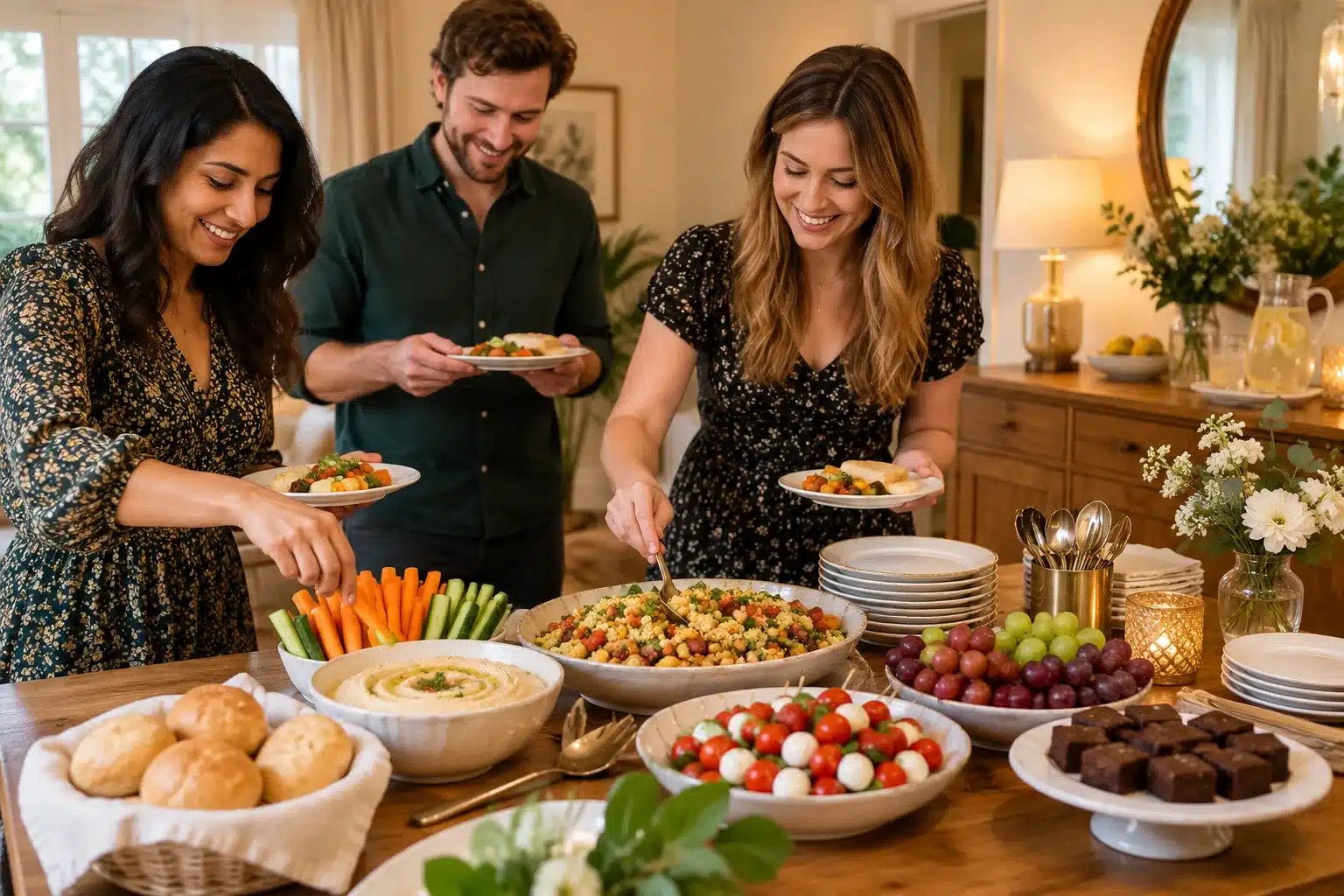
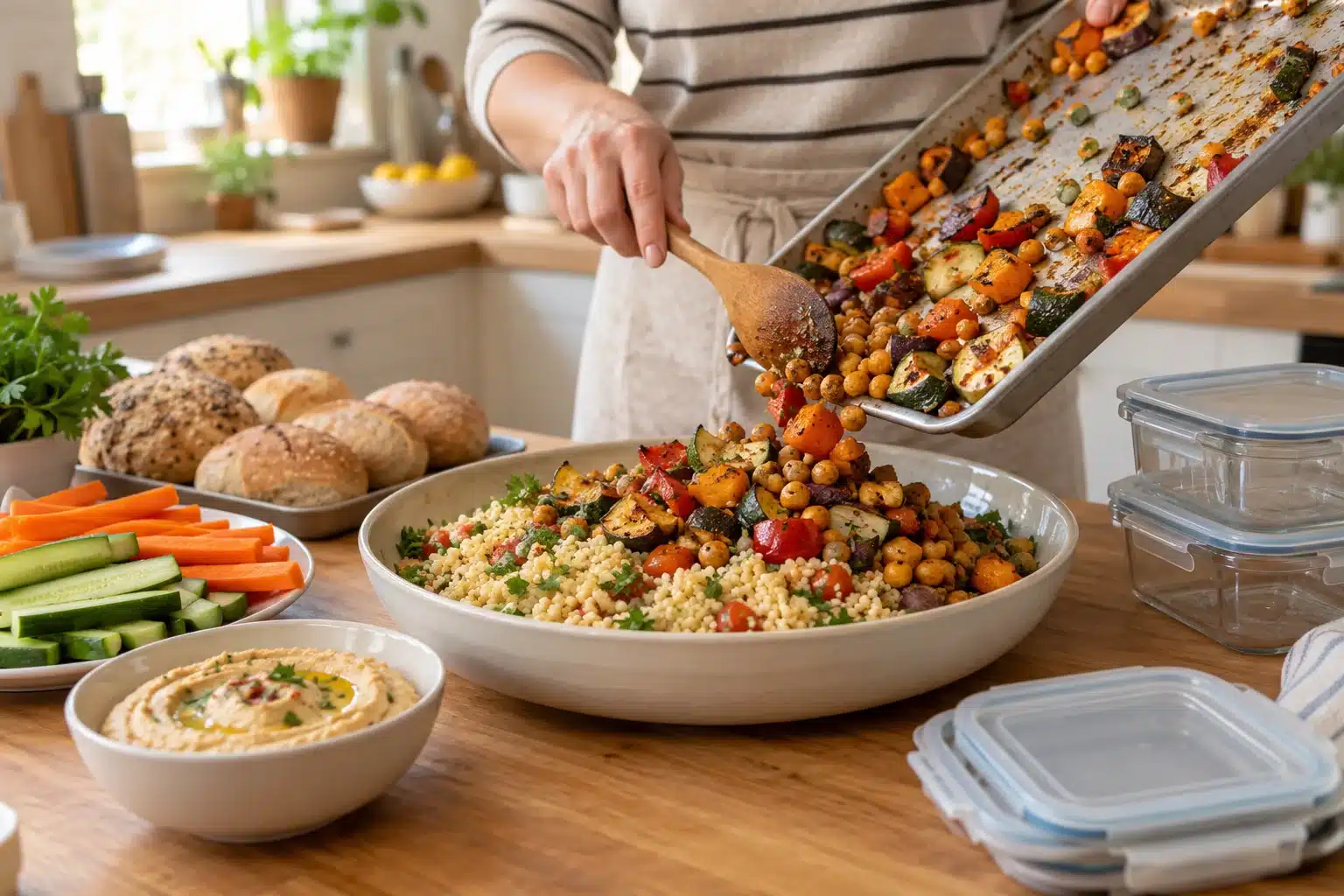
Serve roasted-vegetable and chickpea couscous salad as the substantial centerpiece, with hummus, carrot and cucumber sticks, small bread rolls, and tomato-and-mozzarella skewers. Add olives in a separate bowl if your group enjoys them. Provide forks as well as finger-food options; a buffet need not make every dish handheld.
The couscous salad and chickpeas provide the main volume here. The vegetable sticks are a side, not a replacement for a meal. If you choose a different familiar main, adjust the shopping list rather than serving the same quantities automatically.
Dessert and drinks
Offer grapes and small chocolate brownies, with water, lemon water, tea, and an alcohol-free sparkling drink. Put dessert out at its planned point rather than crowding the main serving area from the start.
Use ingredients and products appropriate for your guests. Standard couscous and bread contain wheat; mozzarella contains milk; hummus commonly contains sesame; brownies may contain eggs, milk, nuts, or wheat depending on the recipe. Check the actual labels and preparation methods.
Useful substitutions
For a dairy-free direction, replace mozzarella with a suitable alternative or use tomato-and-cucumber skewers. A rice or quinoa salad can replace couscous when appropriate, but confirm the rest of the meal and cross-contact arrangements as well. Changing one dish does not make the entire buffet suitable for every guest.

Menu two: a simple seated dinner
Choose this if your room has comfortable dining seats for the active cast and you can serve at one planned pause. Do not ask the playing host to prepare individual orders while everybody else investigates.
A complete three-part menu
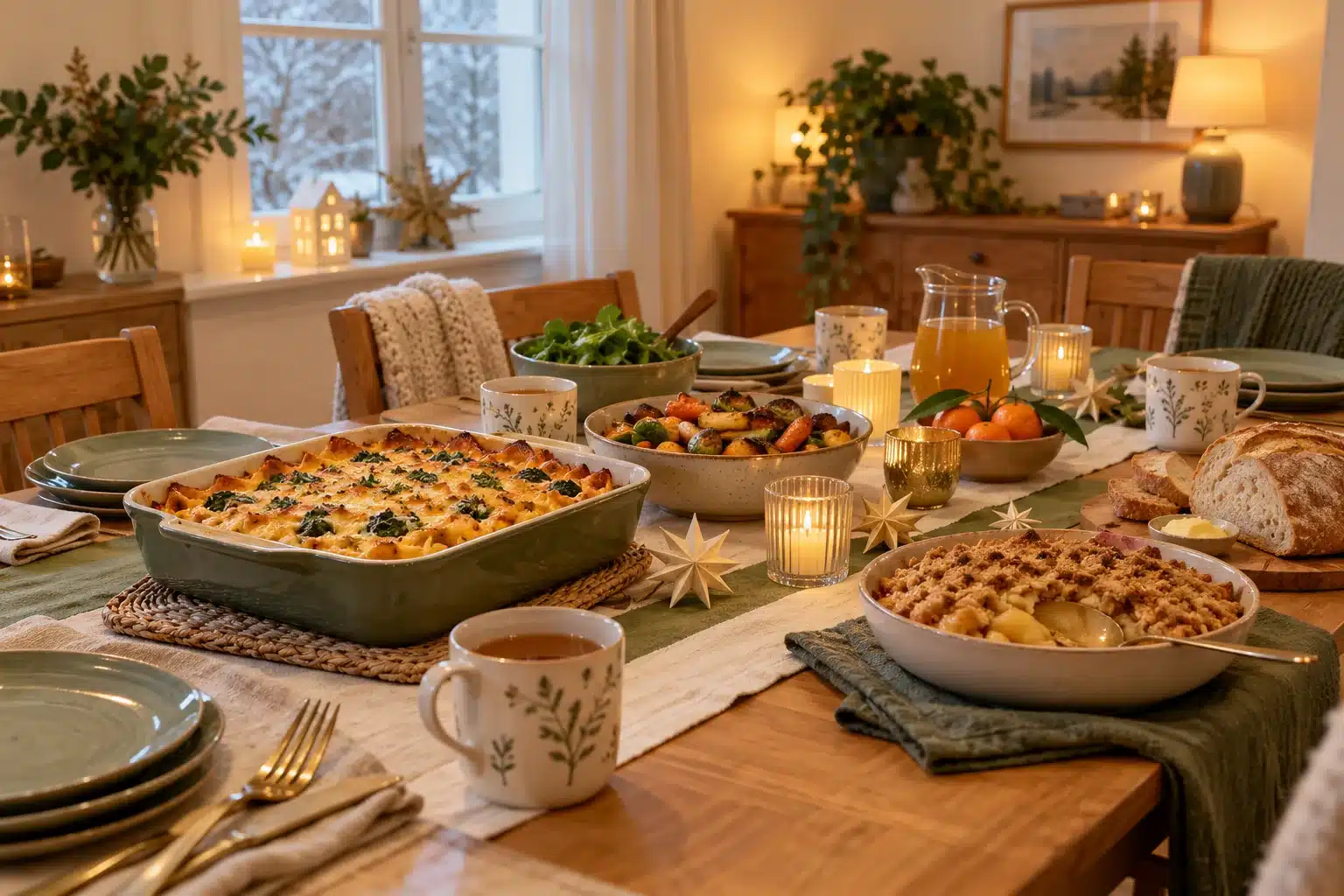
Begin with a small mixed salad, or offer it alongside the main to avoid an extra service. For the main, use a familiar roasted-vegetable pasta bake with a chickpea or white-bean addition if it suits your recipe. Serve bread and a green salad on the side.
Finish with apple crumble and an appropriate custard or dairy-free accompaniment. Offer water, mint tea, or a nonalcoholic apple-and-citrus drink. A single baked main and one dessert give the evening a complete shape without a succession of last-minute pans.
Keep the serving process short
Set the table before arrival, apart from any items that need appropriate storage. Decide who will bring the main to the table and where hot dishes can rest. Use serving utensils that guests can pass easily without moving private booklets through the food area.
Move documents to their designated dry space during dinner, then return them to the correct people. Do not stack every private packet together in a way that makes it easy to swap them accidentally.
Dietary checks
Ordinary pasta and crumble may contain wheat; cheese and custard may contain milk; some pasta and dessert recipes contain eggs. Use suitable recipes and products for the actual group. A vegetable pasta bake is not automatically vegan, gluten-free, or suitable for a milk allergy.
Menu three: a coordinated potluck
A potluck is helpful only when the responsibilities are specific. “Bring something” can produce several desserts, no substantial main, and a table full of dishes needing the same oven.
For eight adults, one workable arrangement is to assign a main with eight planned portions, a substantial salad and bread, a savory snack contribution, and a dessert contribution. The host can handle water and the room. This is an example division, not a requirement that four households attend.
| Contribution | What to agree in advance | Arrival question |
|---|---|---|
| Main dish | One familiar pork-free main planned for eight portions. | Does it need heating, chilling, or immediate serving? |
| Salad and bread | Ingredients and a suitable alternative where needed. | Are serving utensils and ingredient information included? |
| Savory snacks | A few manageable items rather than another full main. | Can they be served without host preparation? |
| Dessert | Eight portions, with the chosen dietary arrangements. | Does it need refrigeration before the break? |
| Host | Drinks, plates, serving space, and the game plan. | Is there room for the arriving dishes? |
Ask contributors to name their dish and its ingredients before the day. For general social hosting advice, Emily Post's host-and-guest guidance emphasizes clear invitations and planning. Here, a named contribution also lets you check the kitchen workload.
A shopping example for eight adults
The following quantities belong to the finger-food buffet above, assuming it is the main meal for eight adults alongside the listed sides and dessert. They are starting estimates, not nutritional advice or guaranteed portions. Adjust for appetite, the recipes chosen, and whether another meal will be served.
| Item | Planning quantity | Why it is on the list |
|---|---|---|
| Dry couscous | About 600 g | Base for the substantial salad. |
| Canned chickpeas | Three 400 g cans, drained | Added to the salad; drained yields vary. |
| Mixed roasting vegetables | About 1.5 kg before preparation | Salad bulk and variety. |
| Hummus | About 500 g | Shared dip alongside the other savory food. |
| Carrots and cucumber | About 1 kg combined | Dipping vegetables and optional skewers. |
| Small bread rolls | Eight to twelve | Served with the salad and dip. |
| Cherry tomatoes | About 500 g | Tomato-and-mozzarella skewers. |
| Mozzarella or chosen alternative | About 250–300 g | A modest side, not the main course. |
| Grapes or another chosen fruit | About 800 g | Shared dessert fruit. |
| Brownies | Eight to twelve small pieces | Dessert alongside fruit. |
| Drinking water and other drinks | Plan around your group and event length | Keep refills accessible; no fixed universal amount. |
Check what is already in the kitchen before buying dressing ingredients, oil, seasoning, or dessert supplies. If you use a recipe that calls for different quantities, follow the recipe and reconsider the serving plan rather than combining incompatible lists.
A preparation schedule that protects your time
Two or three days ahead, finalize the menu, collect dietary information, and assign any contributions. The day before, do the shopping and the tasks your chosen recipes support in advance. Preparation in advance still needs appropriate storage.
Before guests arrive, finish the jobs that require attention, set out nonperishable service items, and arrange the game materials away from the kitchen. Keep perishable food stored appropriately until it is needed. During play, use the planned break instead of disappearing unexpectedly.
The FDA's buffet guidance advises discarding perishable food left at room temperature for more than two hours unless it is kept properly hot or cold; above 90°F, that limit is one hour. Use small serving dishes and replace them rather than repeatedly topping up one platter. Check the full guidance for your service plan.
Keep food out of the evidence
Use separate surfaces where possible. If one table must serve both purposes, give every private packet a clearly assigned dry place before the meal. Wipe and clear the surface before putting shared material back.
Avoid decorative “clue” labels on food that might be mistaken for official story information. A humorous menu title is fine when clearly part of your catering, but a fabricated accusation on a place setting can mislead guests who are trying to reason from the written game.
Match the menu to the theme lightly
You can change the presentation without changing every recipe. A dark runner and small sandwiches can suggest a speakeasy; bowls, mugs, and a warm main can suggest a lodge. Let the public setting influence color, serving style, and names that are clearly decorative.
For existing seasonal planning, see the Christmas-Eve menu guide. If you are choosing a party setting, browse the current kits first. Menu effort should fit around the game you actually buy, not determine unsupported changes to its materials or pacing.
Menu questions hosts often ask
Must a murder mystery include a full dinner?
No. You can offer snacks if the invitation says so and the event plan suits the group. The important point is that guests know whether they are arriving for dinner or an activity with refreshments.
Are finger foods always easier?
They reduce some serving tasks but can still be messy or require storage. Choose food that works with your table and ingredients, and provide somewhere to set down plates before handling papers.
Can I serve a different menu for every character?
That is optional catering work, not a requirement. A shared menu with thoughtful alternatives is often simpler. Do not create character-specific food clues unless the official kit explicitly calls for them.
Find the right mystery for your group
Choose by your confirmed players, occasion, and preferred atmosphere. Check the exact edition’s casting and hosting details before preparing your files.
Explore the mystery kits →General planning advice: your exact game edition’s instructions govern casting, information sharing, and the reveal. Illustrative images do not show official evidence or actual customer events.