
18 Serve a modern speakeasy supper
1920s Speakeasy Party Food: A Murder Mystery Dinner Menu
Plan a modern speakeasy-inspired dinner for eight with savory bites, a make-ahead main, alcohol-free drinks, shopping estimates, and a preparation timeline.
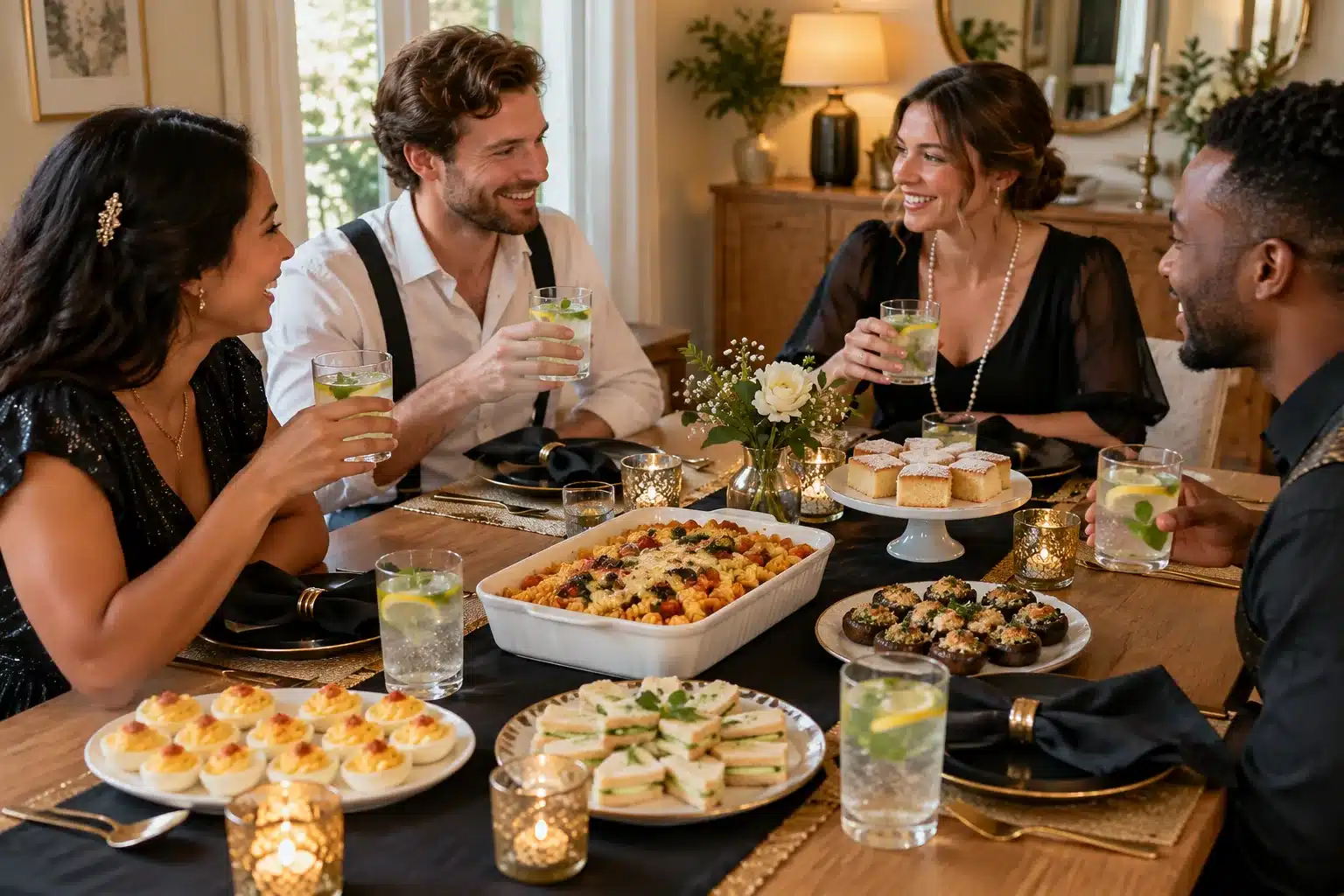
A speakeasy-inspired dinner can feel polished without needing elaborate cooking or alcohol. Choose a few small savory dishes, one dependable main, a modest dessert, and a coordinated table. The goal is food you can prepare and serve around the game, not a historical menu you need to defend dish by dish.
The plan below is a modern, pork-free interpretation for eight adults. It is not a claim that every dish appeared in a 1920s speakeasy, and it is not a set of tested recipes. Use familiar reliable recipes, check actual ingredients, and adapt the quantities to your guests.
Build the menu around one manageable service
Decide whether guests are arriving for dinner or light refreshments. If this is the main meal, provide a substantial main rather than expecting a few canapés to do all the work. State the food plan clearly in the invitation.
The 1920s Speakeasy game gives the evening its fictional public setting. The meal supports that setting through presentation and service; it should not introduce extra clues or interrupt the game's required sequence. Use an authorized pause for dinner and keep active investigation away from the serving dishes.
A dark runner, cream plates, and a small gold detail can connect ordinary homemade food to the theme. You do not need novelty glassware, fake liquor bottles, or a separate dish for every character.
The full eight-person menu
Small bites: deviled eggs
Use a familiar deviled-egg recipe and a simple paprika finish. Twelve whole eggs yield twenty-four filled halves, giving this menu a starting allowance of three halves per guest alongside the other food. Adjust for your group rather than treating that estimate as a universal portion rule.
Check the filling ingredients: eggs are present, and mayonnaise or other additions need label checks. Keep the finished eggs appropriately chilled until serving. Do not leave a platter out for the full length of the game simply because guests are returning for small bites.
Small bites: cucumber-and-cream-cheese sandwiches
Make small pieces that guests can eat easily without juggling a large plate. Use a bread and filling suitable for your actual group, trim or cut according to preference, and prepare through a familiar recipe rather than adding complicated decoration.
Standard bread may contain wheat and other allergens; cream cheese contains milk. If a guest needs a different option, agree a suitable alternative and preparation method. A separate tomato-and-cucumber plate can be useful, but it is not automatically an equivalent meal or a universal allergy-safe replacement.
Small bites: stuffed mushrooms
Use a dependable vegetable-based filling, such as breadcrumbs, herbs, and a suitable cheese if appropriate. The mushrooms add variety without requiring a meat dish. Choose a recipe whose preparation and service fit your available oven and schedule.
If you omit cheese or change the filling, follow a suitable recipe rather than assuming every substitution cooks or stores the same way. Keep track of wheat, milk, and any other ingredients in the actual version you serve.
Main: roasted-vegetable pasta bake
A single pasta bake gives the host a substantial dish to serve at one planned point. Choose a familiar recipe with a tomato base, roasted vegetables, and a suitable topping. If you want chickpeas or beans included, use a version you know works rather than adding them without considering the full recipe.
For this eight-adult example, about 650–700 g of dry pasta is a starting planning amount alongside the starters, salad, and dessert. The recipe, appetite, and other food determine the final quantity. Arrange a clear heat-safe serving place away from booklets and evidence.
Side: a simple green salad
Use a plain salad with dressing available separately when practical. It gives guests a lighter side and is easy to place on the table. Keep the ingredient list clear; a seemingly simple dressing may contain ingredients someone needs to avoid.
Avoid an elaborate salad that requires the playing host to assemble individual plates in the middle of a game stage. A shared dish with clean serving utensils is more manageable for this plan.
Dessert: vanilla sponge squares and fruit
Cut a familiar sponge cake into modest squares and offer fruit alongside it. This gives you a dessert that can be served without a showpiece cake ceremony. You can present it on an ordinary plate or a low cake stand.
Check wheat, egg, milk, and any other ingredients in the chosen cake. If buying it, retain the label. A dairy-free or gluten-free product is not automatically suitable for every allergy or requirement, so agree the actual alternative with the guest concerned.
Alcohol-free drinks with a speakeasy feel
Offer water as well as the themed option. Guests should not need to guess what is in a drink because its name is theatrical. Keep the ingredient information straightforward and use clear “alcohol-free” wording when appropriate.
Three simple directions are lemon-and-mint sparkling water, an apple-and-citrus spritz made without alcohol, or a berry drink mixed with still or sparkling water. These are serving ideas rather than precise recipes or claims of historical authenticity. Adjust sweetness and ingredients to the group.
Use ordinary glasses that are comfortable to hold and stable on your furniture. A dark napkin or small coordinated tray can provide the theme. Do not put secret game information on drink tags or create a fake “poisoned” serving that could be confused with the actual story.
A starting shopping list
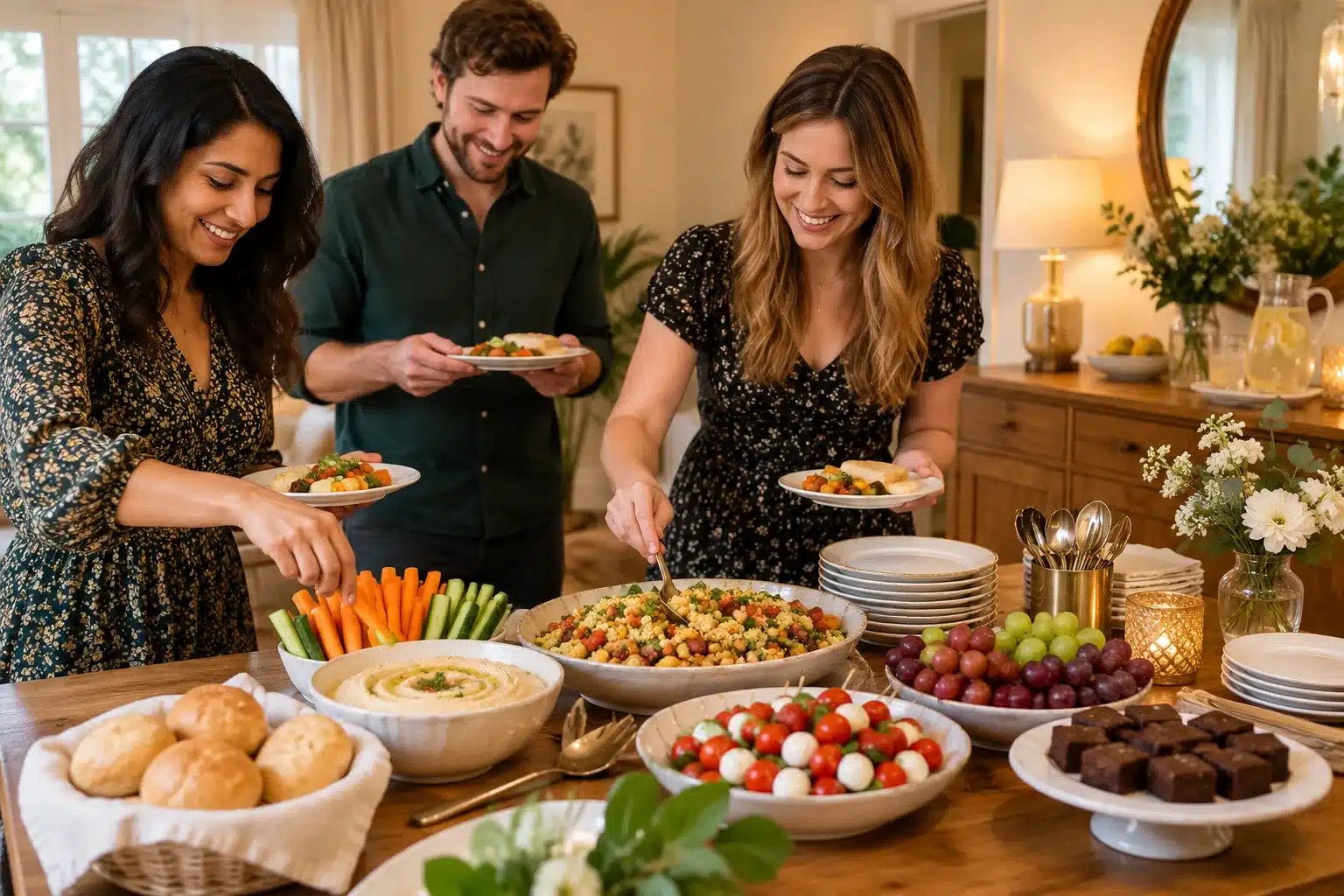
This list assumes eight adults eating the complete menu as their main evening meal. Quantities are estimates for planning, not a tested recipe, nutritional target, or guarantee. Check your recipe yields and adjust for appetite, dietary alternatives, and anything guests contribute.
| Item | Starting quantity | Planning note |
|---|---|---|
| Eggs | Twelve | Gives twenty-four halves for the starter. |
| Bread | About sixteen standard slices | Cut into smaller sandwich pieces; check slice size and recipe. |
| Cucumber | Two medium | For sandwiches and optional extra vegetables. |
| Cream cheese or agreed alternative | About 250–300 g | Adjust to the actual sandwich recipe. |
| Mushrooms | About twenty-four medium | Roughly three each alongside the other starters. |
| Mushroom filling | According to the chosen recipe | Check crumbs, cheese, herbs, and allergens. |
| Dry pasta | About 650–700 g | Main dish served with starters, salad, and dessert. |
| Mixed vegetables | About 1.2–1.5 kg before preparation | Use the bake recipe's actual proportions. |
| Sauce and topping | According to the chosen recipe | Avoid combining unrelated recipe quantities. |
| Salad ingredients | One substantial shared salad | Keep dressing information available. |
| Sponge cake | Eight to twelve small squares | Fruit is served alongside it. |
| Fruit | About 800 g | Choose fruit your guests enjoy. |
| Water and drink ingredients | According to the event and group | Keep refills easy and ingredients clear. |
Do an inventory before buying. Oil, seasoning, mayonnaise, dressing, herbs, and baking ingredients may already be in the kitchen, but they still need to be checked against the chosen recipes and dietary requirements.
Prepare without losing the evening to the kitchen
A few days ahead, confirm the guest count and dietary arrangements. Choose the actual recipes and check which jobs they allow in advance. Plan oven use: stuffed mushrooms and a pasta bake may need the same equipment, so decide the order before the day.
The day before, complete appropriate shopping and preparation tasks using the storage guidance relevant to each dish. Before arrivals, set the table, organize serving utensils, and finish anything that needs your attention. Keep perishable dishes stored appropriately rather than setting every platter out early for appearance.
At the agreed meal break, serve the planned food and give the whole group a clear pause. Keep private packets in their assigned dry places. Clear the main playing surface before resuming so papers do not sit beside sauce or wet glasses.
The FDA's safe-buffet guidance explains appropriate hot and cold holding and replacing serving dishes rather than topping up old food. Use that guidance for the actual service you choose, including any small-bite platters that remain available during a longer gathering.
Add a theme through presentation
Choose a limited palette, use low greenery, and keep the plates and serving surfaces functional. A modern homemade meal can feel coherent through those details without being described as an authentic Prohibition-era dinner.
For broader atmosphere, the existing speakeasy hosting guide covers the room and evening. The vintage decoration guide offers a narrower visual direction. Use those ideas selectively so optional styling does not take time away from preparing the actual game.

Check dietary alternatives dish by dish
If you change pasta, bread, cheese, cake, or fillings, recheck the whole meal. A suitable main does not resolve a starter or dessert that contains something the guest cannot eat. Keep utensils and storage arrangements appropriate to what was agreed.
Offer a meaningful alternative rather than quietly removing most of someone's plate. Ask what works, choose reliable recipes, and retain labels for bought components. Do not claim that an illustrative food photograph shows an allergy-safe preparation process.
Food questions hosts often ask
Is alcohol necessary for a speakeasy theme?
No. The setting can be suggested through clothes, music, and decoration. This menu uses alcohol-free drinks so the theme does not depend on serving alcohol.
Can I serve snacks instead of this full menu?
Yes, if the invitation makes that clear and the event plan suits the group. Reduce the plan deliberately rather than inviting guests for dinner and serving only a few small bites.
Should the meal reveal part of the mystery?
Only if the official game expressly calls for a particular food-related element. Do not invent culinary clues. The main hosting guide helps keep meal service and the actual investigation in a workable order.
Find the right mystery for your group
Choose by your confirmed players, occasion, and preferred atmosphere. Check the exact edition’s casting and hosting details before preparing your files.
Explore the mystery kits →General planning advice: your exact game edition’s instructions govern casting, information sharing, and the reveal. Illustrative images do not show official evidence or actual customer events.