
17 Dress for a speakeasy mystery
1920s Murder Mystery Costumes: Easy Speakeasy Outfit Ideas
Build a 1920s-inspired murder mystery costume with ten wardrobe-based outfit formulas, a styling table, borrowing ideas, and a practical comfort checklist.
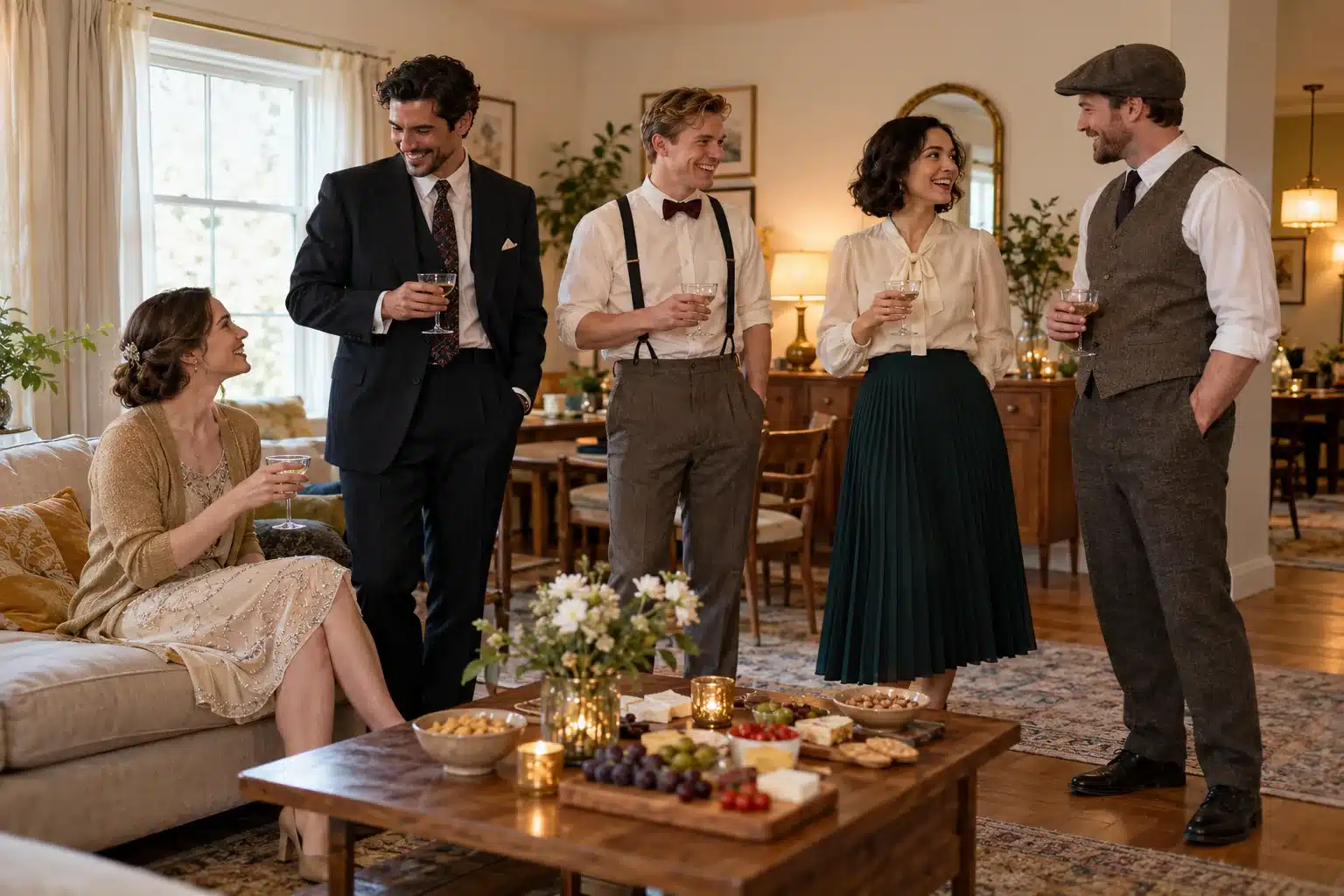
A speakeasy outfit can begin with clothes you already own: a plain dress, a shirt and waistcoat, a cardigan, tailored trousers, or a simple suit. Add one or two considered details and you can suggest the Jazz Age without hiring a theatrical costume or making every guest look the same.
The ideas here are practical modern approximations for a home party. They are not a strict historical dress code. Check the invitation, your character's public description, and the host's expectations before deciding how closely you want to follow period references.
Start with the public setting, not a stereotype
A 1920s-inspired social gathering can include people with different jobs, incomes, ages, and personal styles. A guest need not arrive as a gangster, and every dress need not be covered in fringe. Clothes that are easy to wear and distinct from one another can make a more interesting room.
The 1920s Speakeasy game supplies a public setting to work from. Use only the information you are permitted to know about your role when choosing an outfit. Do not dress around a hidden motive or show a private secret through a prop.
For historical visual inspiration, the V&A's Art Deco fashion article shows how geometry, surface, and decorative detail appear across clothing and accessories from the 1920s and 1930s. Use such references thoughtfully; a later museum garment should not automatically become evidence for an exact early-1920s look.
Ten outfit combinations to assemble
1. A simple evening dress with one detail
Start with an uncomplicated dress you can sit in comfortably. Add a modest brooch, a small hair accessory, or a scarf rather than buying a complete novelty costume. A cardigan or shawl can make the outfit useful in a normal home rather than only for a photograph.
Use comfortable flats or familiar low shoes. The aim is a clear vintage-inspired evening direction, not a requirement for a particular body type, short hem, hairstyle, or expensive jewelry.
2. A blouse and pleated skirt
A plain blouse with a comfortable pleated skirt gives you a separate-piece option. Try cream with navy, brown, muted green, or another combination you already like. A small scarf can provide a finishing detail without making the outfit crowded.
Check the skirt and blouse together while seated. The look should let you reach notes and move between chairs easily. If the host wants a broad speakeasy theme rather than reenactment, ordinary modern versions can be enough.
3. A day dress and soft cardigan
Choose an everyday dress with a simple shape and add a cardigan. This can work for a less glamorous public role or for a guest who would rather dress comfortably than formally. Use one small accessory to give it a deliberate party direction.
Avoid explaining the costume through invented story facts. You can look practical or understated without announcing that your character is poor, suspicious, or hiding something unless that is public information the game provides.
4. A tailored-trouser combination
Use comfortable tailored trousers with a shirt or blouse and a waistcoat, jacket, or soft layer. A tie or simple scarf can bring the separate pieces together. This gives guests another option beyond dresses and matching suits.
Treat it as a modern party interpretation unless you have researched a more specific historical look. Choose the character's permitted public name and presentation options through the kit, while keeping the clothes comfortable for the person wearing them.
5. An ordinary suit and patterned tie
A suit you already own can become a speakeasy-inspired evening outfit with a patterned tie and a simple pocket square. You do not need pinstripes, a dramatic hat, or a fake weapon to make the theme recognizable.
Check that the jacket lets you write and sit comfortably. Removing it during a warm evening does not mean the outfit has failed; a coherent shirt-and-trousers base should still work. Borrowed clothes should be tried on before the party.
6. A waistcoat over a plain shirt
Use a comfortable shirt, waistcoat, and trousers, with a tie if you want one. A well-fitting ordinary waistcoat often provides enough visual direction on its own. Shoes can remain familiar loafers, lace-ups, or another suitable comfortable pair.
This formula works at several levels of formality. You can keep the sleeves down for a polished public reception or use a more relaxed arrangement if the host's brief allows it. There is no need to invent a specific job to justify the clothes.
7. Shirtsleeves, suspenders, and a bow tie
Start with plain trousers and a shirt, then add suspenders and an optional bow tie. Keep the combination simple so one accessory does not become a collection of exaggerated costume signals. Check that the suspenders fit and remain comfortable when you sit.
Use an outfit you can move in rather than an imitation uniform. A public role may suggest a working look, but your clothes should not imply secret information or turn a real occupation into a caricature.
8. A textured jacket and flat cap
Combine a plain shirt, ordinary trousers, and a textured jacket if you have one. A flat cap can provide the single finishing detail. Remove it when useful rather than making a hat something you must manage at every conversation.
This is a practical alternative for someone who prefers a layered outfit to formal eveningwear. Modern fabrics and cuts are fine for a broadly inspired party unless the invitation explicitly sets a different standard.
9. A knitted vest and neat separates
A plain knitted vest over a shirt, with comfortable trousers or a skirt, can give an understated look. Choose restrained colors and one small finishing detail rather than buying several new pieces. A cardigan can replace the vest if that is what you have.
This formula helps vary the room so not every person wears a suit or sequined dress. It is a styling suggestion, not an assertion that every possible modern knit is historically exact.
10. Dark separates with a geometric accent
Use a simple dark blouse or shirt with trousers or a skirt, then add a small geometric brooch, scarf pattern, or other comfortable detail. The coordinated base can feel dressed up without requiring a complete era-specific outfit.
Avoid oversized jewelry that knocks against glasses or gets caught in papers. A small visual reference is enough when the setting, music, and the other guests also establish the atmosphere. Leave your hands free for the actual game.
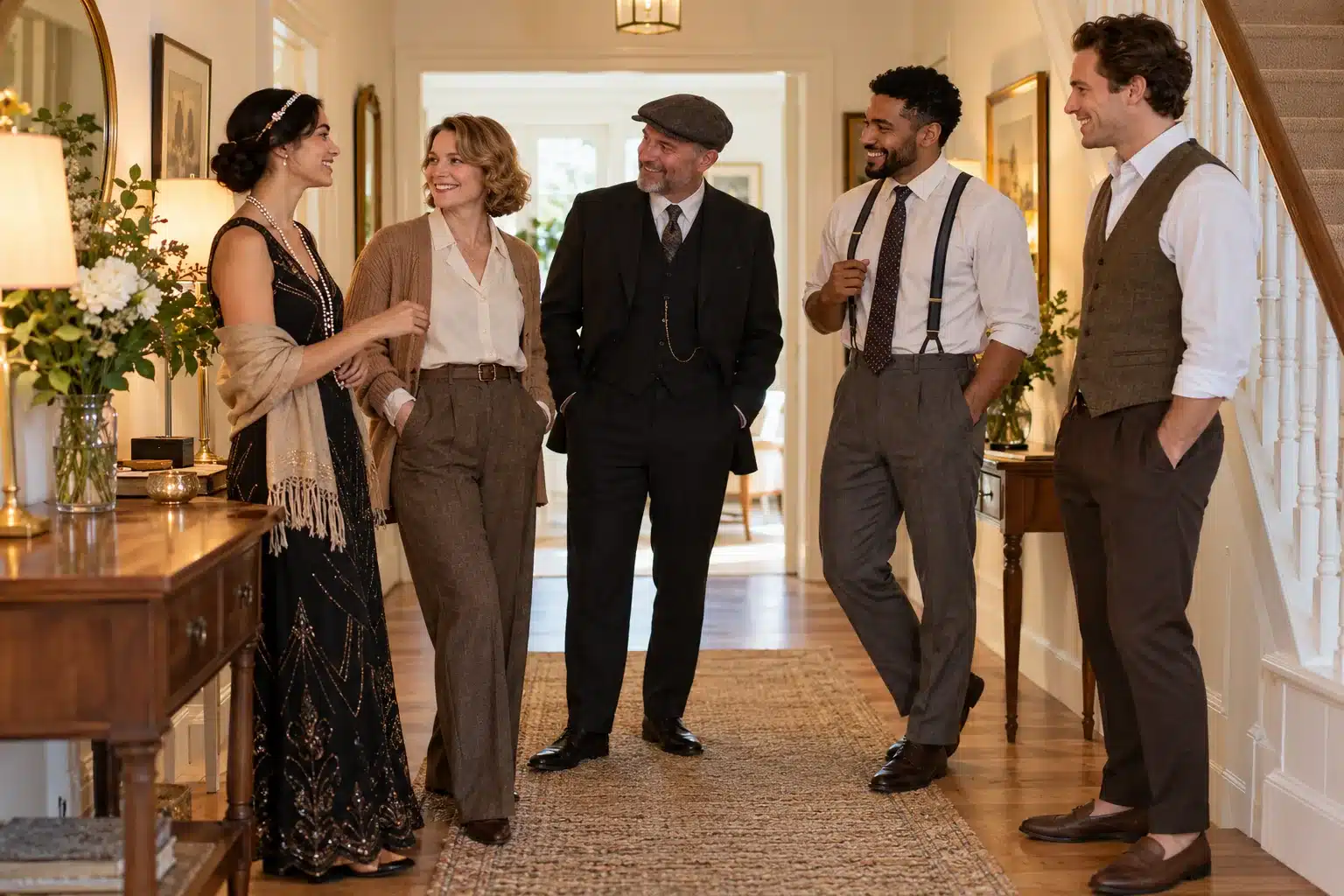
Your outfit matrix
These are affordable modern styling formulas, not a museum reconstruction guide or official costume requirements for particular characters.
| Look | Base clothing | Finishing detail | Comfortable alternative |
|---|---|---|---|
| Simple evening | Existing uncomplicated dress | Small brooch or scarf | Add a familiar cardigan. |
| Pleated separates | Blouse and pleated skirt | Modest scarf | Use the skirt and blouse without extra accessories. |
| Practical daywear | Day dress and cardigan | Simple hair accessory | Keep ordinary flats and minimal layers. |
| Tailored trousers | Trousers and shirt/blouse | Waistcoat or tie | A neat soft jacket instead of a fitted waistcoat. |
| Suit | Existing suit | Patterned tie | Wear the shirt and trousers when the room is warm. |
| Waistcoat | Plain shirt, waistcoat, trousers | Optional pocket square | Leave the tie off if the dress code permits. |
| Shirtsleeves | Plain shirt and trousers | Suspenders or bow tie | Choose just one accessory. |
| Textured layer | Jacket and ordinary separates | Flat cap | Skip the hat when seated. |
| Knitted layer | Shirt and knitted vest | Small coordinating detail | Use an existing cardigan. |
| Dark separates | Plain dark outfit | Geometric accent | Let the color coordination do the work. |
Borrow one useful piece
Before buying, identify the gap. If you already have a plain shirt and trousers, borrowing a waistcoat may finish the outfit. If you own a simple dress, an existing scarf may be enough. There is no advantage to assembling a complicated costume that does not fit.
Try borrowed pieces with the clothes and shoes you will actually wear. Look at the outfit in ordinary light and sit down in it. A clip that slips, a tight collar, or shoes that are only comfortable for a photograph will become more noticeable during a full evening.
Do not pressure guests to spend the same amount. A good costume brief can welcome a range of effort. If you are hosting, show two or three achievable public examples rather than only elaborate reference images.
Keep historical inspiration honest
A modern plain suit, an accessible blouse-and-skirt outfit, and a simple dress can create a coherent party without being exact reproductions. Call them inspired looks. A host who wants a particular year, location, or degree of accuracy should say so in advance.
Avoid mixing periods and then presenting the result as definitive historical guidance. Museum resources can help you understand the reference, while practical adaptation lets guests use what they have. Those two purposes are compatible when you label them clearly.
For the room and evening around the outfits, the existing speakeasy hosting guide provides a broader starting point. Keep clothing decisions focused on the public theme rather than reading ahead to work out how suspicious a character should look.
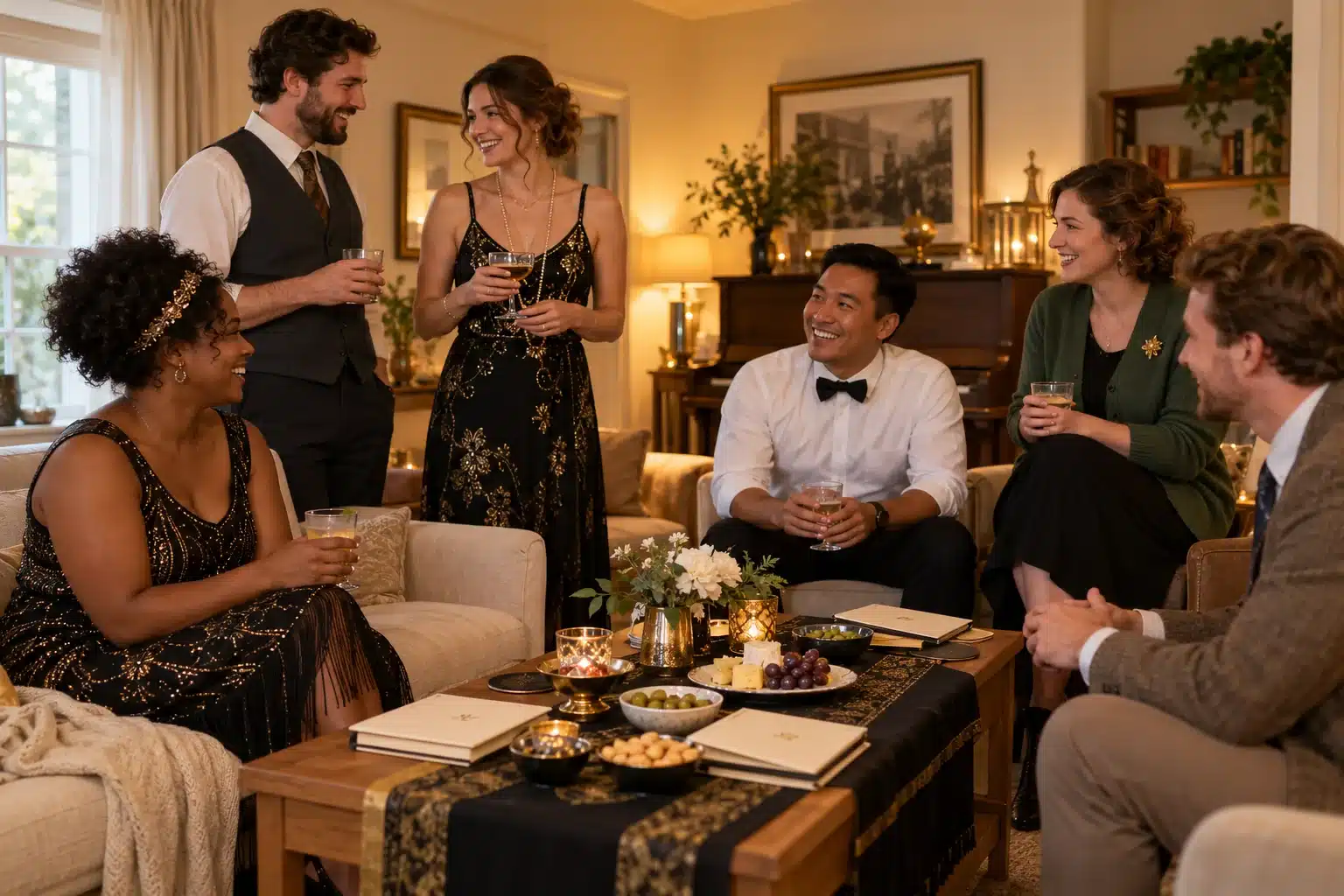
A small packing and comfort checklist
Speakeasy costume questions
Does everyone need a hat?
No. Treat a hat as one possible accessory rather than a rule. It may be more convenient to remove it at the table, and plenty of outfit formulas work without it.
Are sequins or fringe required?
Not by this guide. A plain dress, neat separates, or an understated suit can support the public theme. Check the host's actual brief before assuming a particular costume signal is compulsory.
Can I wear my normal clothes with one accessory?
That may be exactly what a wardrobe-first invitation intends. Ask the host if uncertain. If you are choosing the game as well, begin with the current catalog and the main hosting plan, then make the costume request match the evening you are actually arranging.
Find the right mystery for your group
Choose by your confirmed players, occasion, and preferred atmosphere. Check the exact edition’s casting and hosting details before preparing your files.
Explore the mystery kits →General planning advice: your exact game edition’s instructions govern casting, information sharing, and the reveal. Illustrative images do not show official evidence or actual customer events.