
15 Start with your wardrobe
What to Wear to a Murder Mystery Party: Easy Costume Ideas
Choose a murder mystery party outfit from your own wardrobe, with seven practical costume formulas, a comparison table, and a comfort-first checklist.

Your murder mystery outfit should help you feel part of the setting while still letting you sit, read, move, and talk comfortably. It does not need to look like a theatrical costume. For many home parties, ordinary clothes with one recognizable detail are a more practical starting point than a complete rented outfit.
Begin with the invitation and your character's public description. Ask the host what is expected before shopping. A suggested era, a compulsory dress code, and an optional accessory are three different instructions.
Read the invitation before choosing clothes
Check the public theme, venue, expected formality, and whether costumes are optional. A glamorous casino gathering and a casual camp setting can both be mystery parties, but their clothing signals are different. The title of the activity alone does not establish a dress code.
Look at the role information you are allowed to use for preparation. A public occupation or social role may provide an outfit direction, but you do not need to dress around private secrets. Avoid showing a hidden objective through an accessory or a joke name badge.
If a description is unclear, ask a practical question: “Would a plain shirt and waistcoat fit the public theme?” That gives the host something specific to answer. For the overall event format, the home-hosting guide explains the preparation around the clothes.
A simple outfit formula
Start with a comfortable base: a dress, skirt and blouse, shirt and trousers, or another combination you already wear. Add one public-theme signal, such as a scarf, waistcoat, cardigan, or simple accessory. Finish with shoes you can use for the whole evening.
Try the outfit sitting down as well as standing. Can you read a booklet, write a note, reach a table, and move between chairs? An impressive sleeve or hat becomes less useful if you spend the evening adjusting it or blocking someone else's view.
There is no need to make all guests match. Consistent expectations matter more than identical colors. A host can say “simple vintage-inspired clothes; accessories optional” and still welcome several different interpretations.
Seven wardrobe-first directions
Modern party or professional gathering
Use a smart-casual outfit that fits the fictional public occasion: a blazer with ordinary trousers, a simple dress, a blouse and skirt, or a neat shirt. A lanyard or name card should only be used when appropriate to the game and approved by the host.
This can be a low-effort choice for guests who do not want period clothing. Do not assume a fictional job must match your real job, and do not bring actual work credentials or confidential documents as props. The character information supplies the role; clothing only gives a visual suggestion.
1920s speakeasy
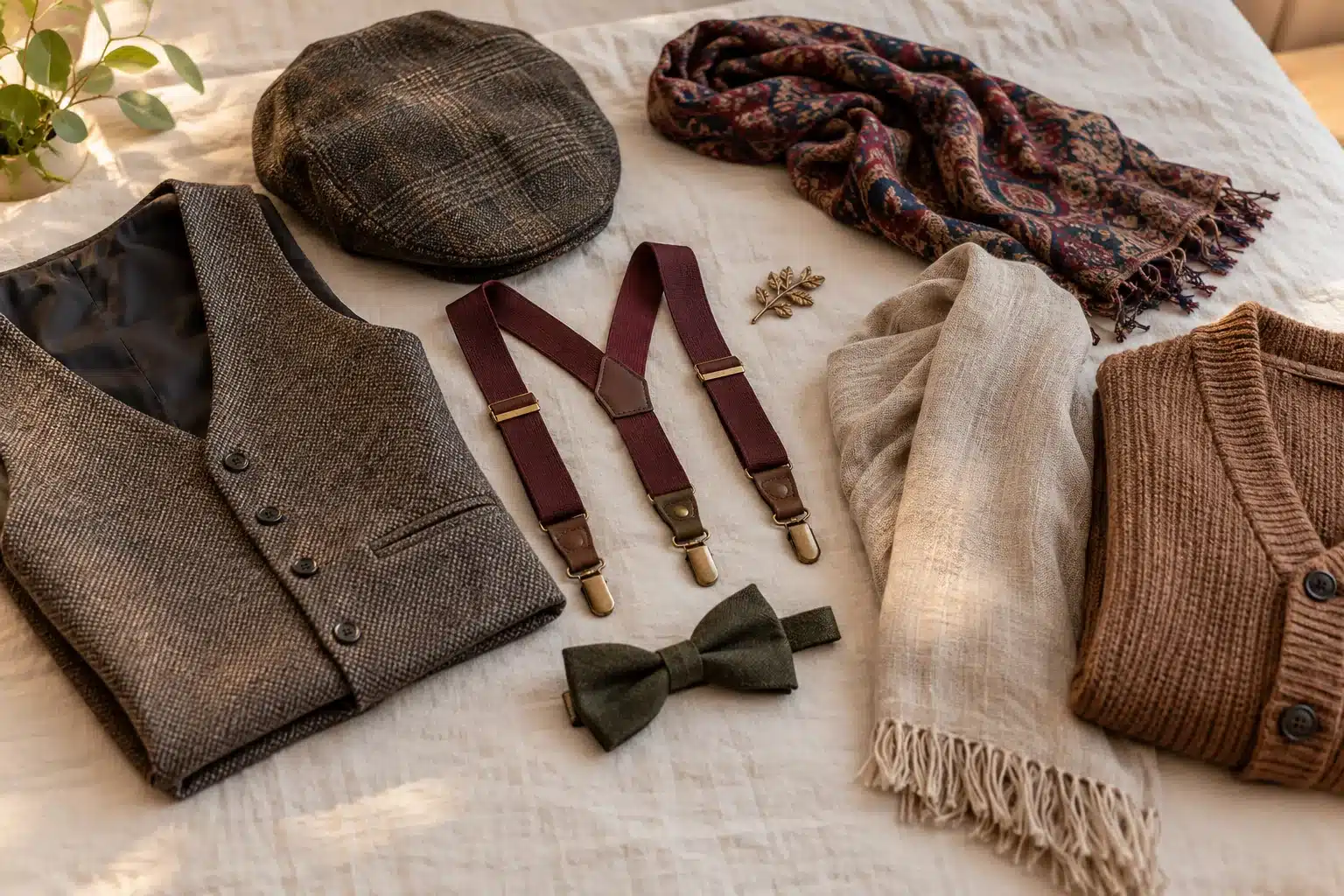
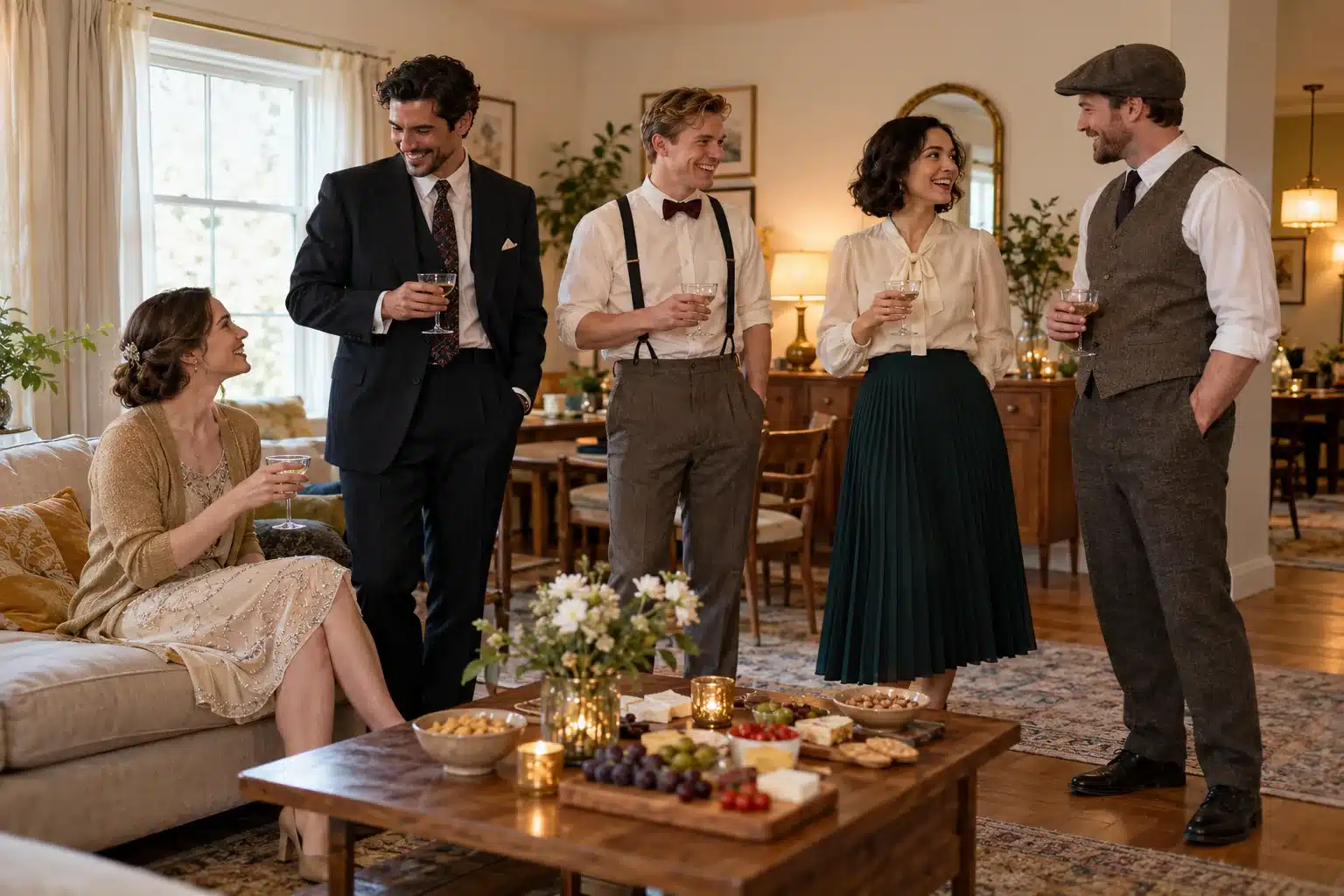
Try a waistcoat over a plain shirt, a simple evening dress with a cardigan, a blouse with a pleated skirt, or shirtsleeves with suspenders. A flat cap, scarf, modest brooch, or tie can finish the look if you already have one.
These are modern party approximations rather than a demand for historical reconstruction. The 1920s Speakeasy game gives a clear public setting for a vintage direction, but the exact outfit can remain comfortable and affordable. A gangster caricature is not the only way to signal the decade.
Victorian-inspired soirée
A long skirt, modest blouse, waistcoat, cardigan, or simple high-necked dress can suggest a period social gathering. Use a small scarf or a plain brooch rather than an elaborate prop that competes with the game materials.
You do not need a full historical silhouette for a home party unless the host has explicitly arranged a reenactment-style event. Be clear about the difference between inspiration and accuracy. A familiar, well-fitting combination usually serves conversation better than something stiff or difficult to sit in.
Medieval-inspired banquet
Use a long plain top or tunic-style garment over comfortable trousers, a simple long dress, a shawl, and a belt. Keep any draped fabric secured in a way that leaves your hands free and does not trail around the chairs.
Choose plain practical footwear rather than buying a complicated costume shoe for one evening. A garment in olive, brown, cream, or muted red can give a coherent visual direction without armor or a weapon. Let the public role guide your styling without inventing rank or story information.
Roman-inspired gathering
A simple linen-style dress or tunic, shawl, belt, and suitable comfortable shoes can suggest a Roman-inspired setting. Do not assume every participant needs a large wrapped sheet. Some improvised wraps need constant adjustment and can be awkward at a dinner table.
For a normal home event, label the look as inspired by the period rather than historically exact. Avoid dressing as a caricature of a modern culture or adding invented military insignia. The Roman Senate mystery listing is a current public setting to consider if you are selecting a game as well as an outfit.
Casino evening
Use an existing suit, a neat jacket with trousers, a simple evening dress, or a smart blouse. A coordinated scarf or one modest accessory can make ordinary clothes feel more deliberate. Formal styling does not require a luxury purchase.
Check the host's wording: “casino-inspired smart clothes” can mean something much more relaxed than black tie. You should still be able to sit, stand, and handle your materials comfortably. The Vegas Poker Tournament setting is a theme direction, not a requirement to bring money, gambling equipment, or special skills.
Winter lodge or festive home
A sweater, checked shirt, cardigan, comfortable trousers, or everyday festive outfit can work well. Layering is useful if the room is warm when everyone gathers. You do not need ski boots, outdoor equipment, or heavy clothes to suggest a lodge indoors.
The Christmas ski-lodge game offers that public setting, while a broader holiday gathering may use ordinary party clothes. Ask whether the host wants a specific character-related detail before adding anything elaborate.
Compare the outfit options
The table gives modern home-party ideas, not historical dress rules or mandatory product requirements.
| Theme | Base clothes | One optional detail | Footwear and low-effort alternative |
|---|---|---|---|
| Modern | Blazer, shirt, dress, or smart separates | Plain scarf | Comfortable normal shoes; keep your usual smart-casual outfit. |
| 1920s | Waistcoat outfit, simple dress, or blouse and skirt | Tie or flat cap | Existing loafers or flats; add only a cardigan or tie. |
| Victorian-inspired | Long skirt or trousers with blouse/shirt | Small brooch | Plain comfortable shoes; use a cardigan as the main period hint. |
| Medieval-inspired | Plain long top or dress | Belt or shawl | Ordinary practical shoes; skip elaborate layers. |
| Roman-inspired | Simple tunic-style top or linen-style dress | Secure shawl | Comfortable suitable shoes; avoid an unstable wrap. |
| Casino | Existing suit, jacket, or evening outfit | Coordinated accessory | Shoes you can wear all evening; use a normal party outfit. |
| Winter lodge | Sweater, cardigan, or checked shirt | Small festive detail | Ordinary indoor-friendly shoes; everyday knitwear is enough. |
Borrow and reuse before buying
Look for one missing element rather than a whole new costume. Borrow a waistcoat, use an existing scarf, or ask whether a friend has a suitable cardigan. Check fit and comfort before the day so a borrowed item does not become a last-minute problem.
If you do buy something, choose a piece you would be happy to wear again. A plain shirt or practical pair of shoes can be more useful than a novelty accessory. There is no need to compare spending with other guests; a clear host brief should make modest outfits feel welcome.
For historical visual references, browse a collection such as the V&A's fashion resources. Use it to understand silhouettes and details, not as a shopping list or proof that a modern party outfit is historically exact.
Keep the outfit independent of acting ability
Dressing for the setting does not mean you must use an accent or deliver an improvised speech. Follow the game's actual participation rules, but do not assume an elaborate outfit requires a larger performance than a simple one.
Likewise, an ordinary voice does not make a character less valid. You can use your role information carefully, ask useful questions, and enjoy the fiction while wearing comfortable everyday clothes. The role's written information matters more than how expensive the outfit looks.
Questions worth asking your host
If you are organizing as well as attending, browse the current games and choose the public setting before writing a dress code. Do not leave clothing expectations so vague that guests feel they need to research the whole mystery to get them right.
Costume questions guests often ask
Can I wear trousers regardless of my character's name?
Ask about the game's public role options and the host's expectations. Comfortable trousers can form part of many suggested modern party looks. Do not change the character's facts or relationships simply to justify a clothing choice.
Do I need a prop weapon?
No outfit in this guide depends on one. Use ordinary clothing and non-secret accessories to suggest the setting, and leave realistic weapons out of the preparation. Official game props, if any, should be handled only as the kit instructs.
What if I do not own anything that matches?
Send the host a simple option you can assemble and ask whether it works. A clear answer before shopping is more useful than guessing at a strict historical requirement that the host never intended.
Find the right mystery for your group
Choose by your confirmed players, occasion, and preferred atmosphere. Check the exact edition’s casting and hosting details before preparing your files.
Explore the mystery kits →General planning advice: your exact game edition’s instructions govern casting, information sharing, and the reveal. Illustrative images do not show official evidence or actual customer events.