
26 Bring Roman inspiration home
Ancient Roman Murder Mystery Party: Costumes, Food, and Décor
Host a Roman-inspired murder mystery with simple costume formulas, a room-and-supply table, a modern pork-free menu, and practical preparation checks.
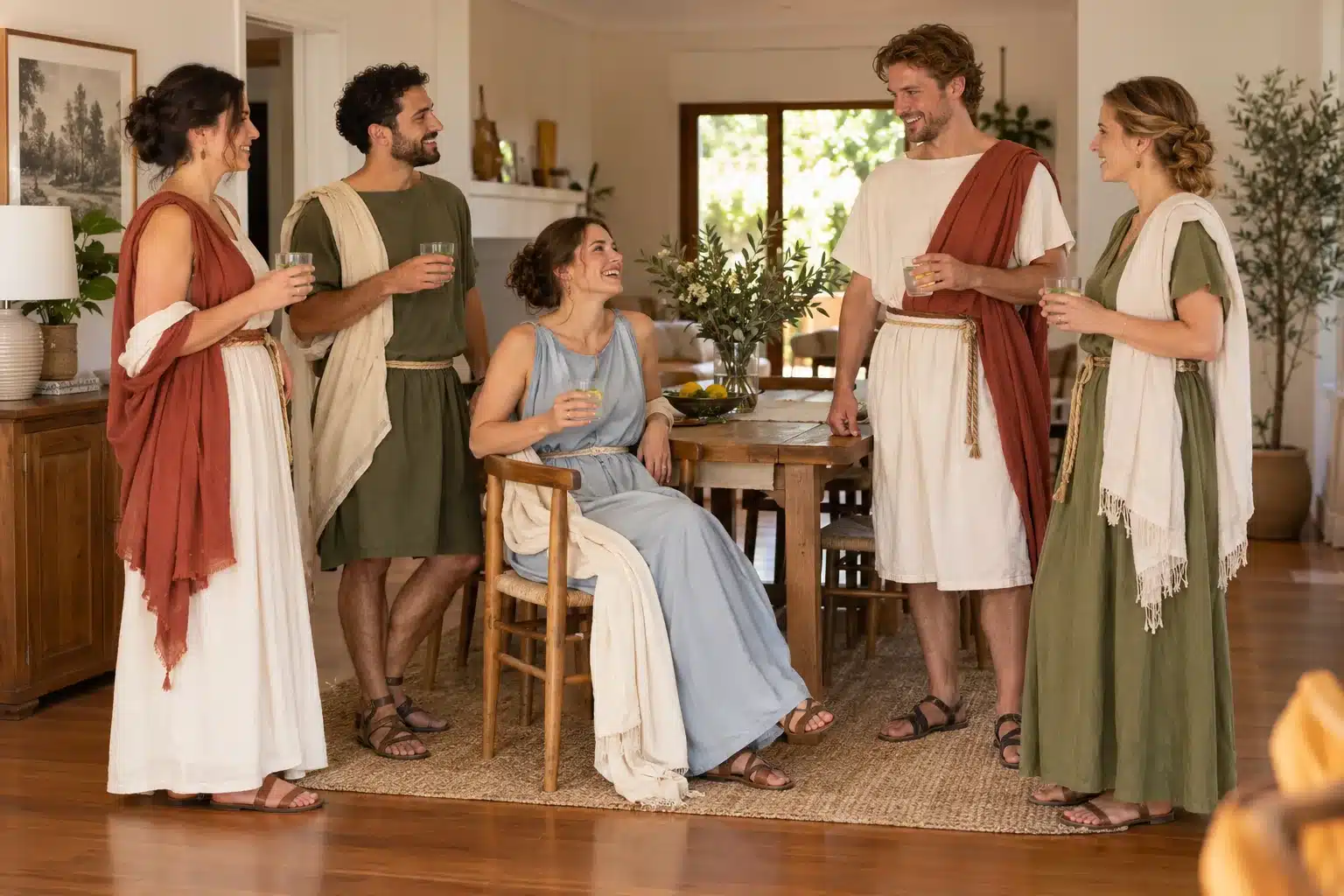
A Roman murder mystery party can feel distinctive with a few simple choices: comfortable tunic-shaped clothes, olive and terracotta colors, ordinary ceramic dishes, and a modern meal you can prepare at home. Keep the room practical for conversation and reading. The story supplies the intrigue; the decorations only need to suggest its public setting.
This guide separates museum-grounded visual references from easy modern party adaptations. It does not require a historical reenactment, a gladiator costume, or an elaborate toga. The menu and room plan are original hosting suggestions rather than claims about what every Roman household wore or ate.
Begin with the exact Roman setting
The current Ancient Rome Senate Intrigue game publicly places its story in 63 BCE around a crucial Senate vote. That gives you a more useful starting point than a general collection of ancient-world props. Keep clothing and decorations connected to the public setting and preserve the purchased edition's story details.
If your downloaded edition is titled Daggers in the Forum, use the public title and costume guidance supplied with that edition when briefing guests. Check any uncertainty with support before preparation; this article does not replace the actual role list, required cast, or host instructions.
A late-Republic-inspired evening can use draped fabric and restrained colors without importing fantasy armor, imperial crowns, or a sports-style gladiator contest. Ordinary guests should be able to arrive, sit, handle pages, and talk comfortably.
Confirm the active player count and host arrangement before assigning outfits. The group-size guide helps organize those questions. The exact kit determines how the supported cast is chosen and whether a host can also play without advance knowledge of the ending.
Use Roman references carefully
A museum object is useful because it gives you something specific to observe. The Met's statue of a man wearing a tunic and toga shows the relationship between an undergarment and a draped outer layer. The museum dates this statue to the first century CE, later than the linked game's 63 BCE setting; it is a comparative visual reference, not proof of an exact costume for that fictional evening.
Notice broad shapes such as a simple base garment and a separate wrap. A modern long shirt, plain dress, shawl, or fabric belt can suggest those shapes while remaining an adaptation. You do not need to claim that a guest's modern sandals, fabric, color, or fastening is an archaeological reconstruction.
Choose public role guidance over assumptions. Roman-themed clothing does not need to assign status, virtue, or suspicion through stereotypes. The character materials provide the role; an outfit helps the guest enjoy the room.
| Element | What is grounded here | Modern choice for the party |
|---|---|---|
| Tunic and draped outer layer | A documented combination visible on the cited museum statue. | A comfortable long shirt or simple dress with a separate shawl. |
| Date and detail | The museum object is later than the game's stated setting. | Use broad visual inspiration rather than claiming an exact 63 BCE reconstruction. |
| Footwear | No period-specific footwear claim is made by this guide. | Comfortable flats or sandals suitable for your floor and guest. |
| Food | No historical recipe claim is made for the menu below. | Familiar pork-free dishes with a coherent presentation. |
| Room styling | No reconstruction of a Roman house is promised. | Terracotta fabric, plain ceramics, and a few leafy accents. |
Build five easy costume formulas
A long shirt with a separate wrap
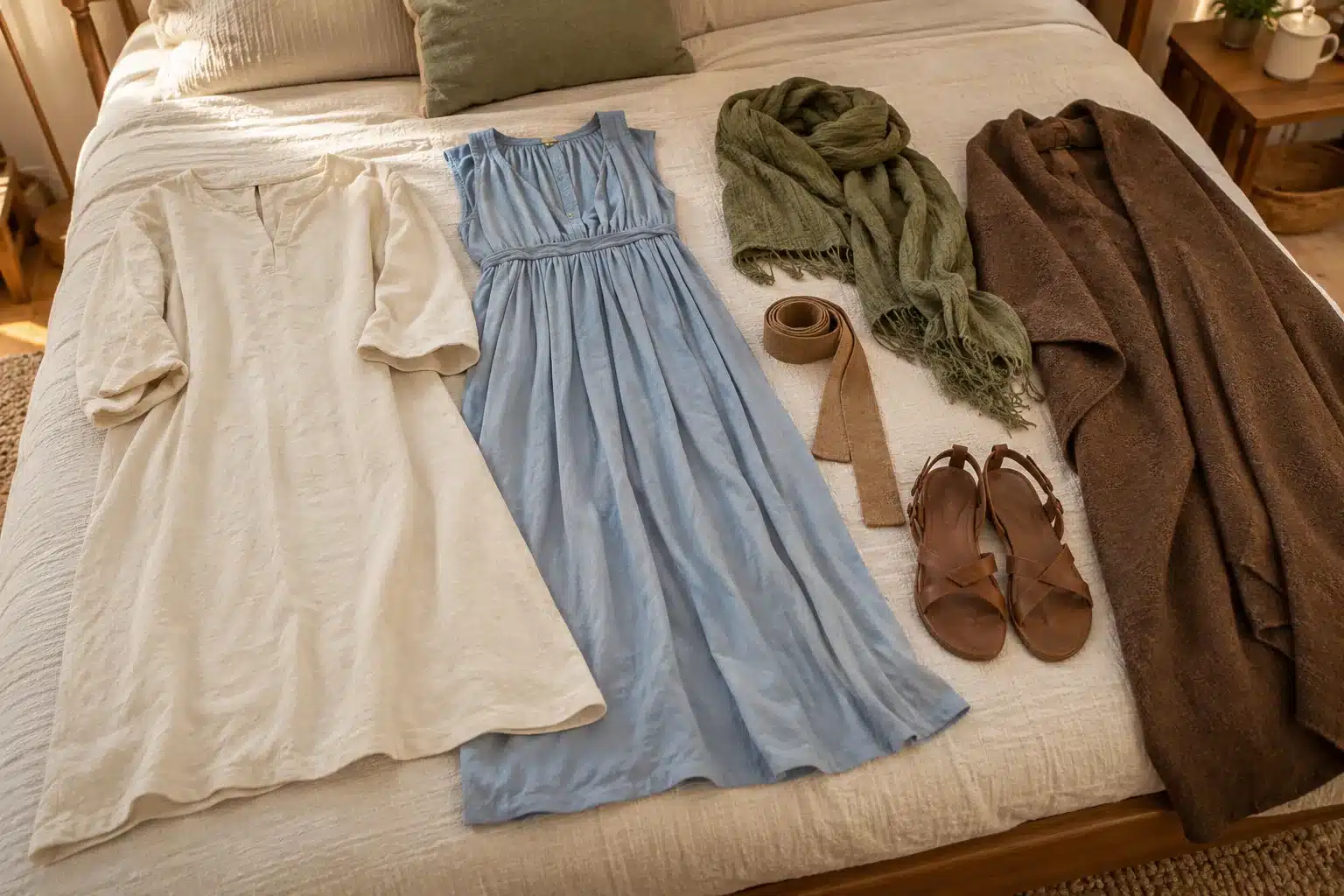
Use a plain long shirt or tunic-shaped garment over comfortable clothing, with a narrow cloth belt and a shawl over one shoulder. Keep the wrap secured in a way that lets the guest move and sit normally. Cream, olive, muted brown, or terracotta makes a simple palette.
A plain long dress and shawl
Start with a comfortable dress the guest already owns. Add a plain wrap and a fabric belt if wanted. A modern dress does not need complicated alteration to contribute to the theme, and a cardigan can remain available if the room is cool.
Simple separates under a loose outer layer
A long plain top and loose trousers can work for a guest who prefers separates. Add a lightweight wrap or plain open layer. Call it Roman-inspired party clothing rather than a historically exact outfit, and keep the host's public guidance consistent for everyone.
An ordinary dress with one color detail
For minimal effort, choose a familiar neutral outfit and add one olive, rust, or cream scarf. This is useful for guests traveling after work or people who do not want to buy clothing for one evening. Set that option out in the invitation so guests know it is welcome.
A borrowed tunic with practical shoes
If someone already owns a suitable simple costume, borrowing can be enough. Check the fit, sleeves, length, and seating comfort in advance. Pair it with footwear that works in the actual home rather than buying a decorative pair that makes movement awkward.
All five directions are flexible across gender expression and body type. The goal is a public setting people can recognize, not a uniform. Avoid assigning costume rules through hidden character information or assuming a particular guest must dress as a soldier.
Style the room with a small supply plan
Choose one fabric color, one neutral, and one small foliage detail. An ordinary wooden table and plain plates already give you much of the useful setting. Keep the shared information readable and leave enough space for private materials and notes.
| Purpose | Reuse first | Optional addition | Practical check |
|---|---|---|---|
| Base outfit | Long shirt, simple dress, or plain separates. | Borrowed tunic-shaped garment. | Comfortable sitting and unrestricted sleeves. |
| Outer layer | Shawl, scarf, or lightweight wrap. | Plain cloth belt. | Secure enough for ordinary movement. |
| Table color | Existing cream cloth or bare wood. | Terracotta or olive runner. | Materials can lie flat without crowding plates. |
| Small decoration | Plain bowls and a little leafy foliage. | A low ceramic vase. | Guests can see across the table. |
| Light | Existing household lamps. | Battery candles for atmosphere. | Actual pages remain easy to read. |
| Game organization | Dry table, plain folders, and pencils. | A tray for permitted shared materials. | Decoration cannot be mistaken for official evidence. |
| Drinks and food | Ordinary glasses and serving dishes. | One coordinated pitcher. | Food has its own serving surface. |
Use ordinary room names and clear routes. A small decorative reception area can suggest an arrival without pretending your hallway is part of the official investigation. Avoid fake decrees, maps, seals, or tablets that guests might mistake for additional game information.
Serve a modern Roman-inspired menu
For eight adults, a practical vegetarian menu is lentil-and-vegetable stew, bread, olives, cucumber salad, grapes, figs, and citrus water. These are familiar modern dishes chosen for a cohesive party meal, not an assertion that they reproduce a late-Republic banquet.
Use the stew recipe's eight-person yield as the main-meal starting point. As a shopping estimate, plan one main portion per person, bread to accompany the stew, a shared salad, and eight fruit portions. Adjust for appetite, the recipe, dietary alternatives, and any starter you add.
You can offer prepared roast chicken as an optional second main if your guests prefer it. Count how many people want each main before buying; two dishes do not both need to be sized as the only main for eight. Keep the default meal pork-free and drinks alcohol-free.
Check bread for wheat, sauces and stock for their actual ingredients, and any added cheese, yogurt, or nut garnish separately. A lentil stew can suit a vegetarian menu without automatically meeting every dietary need. Discuss specific arrangements with the guest concerned and use appropriate recipes and utensils.

Prepare before guests arrive
Choose recipes you know, assemble the serving dishes, and prepare food according to those recipes' actual storage and reheating instructions. Finish table styling before cooking work makes the surfaces busy. Arrange a dry place for game materials before any food reaches the table.
For service, the FDA's buffet guidance advises replacing serving dishes with fresh ones rather than adding new food to an old platter. Plan who handles that task if food remains available during a long gathering. A seated meal before play may be easier for a small household than continuous service.
Protect a complete game window
Serve dinner before the briefing or at a break explicitly permitted by the edition. A themed meal should support the investigation rather than require a new sequence of events. Give the host time to join the table instead of preparing a separate dish for each character.
A simple sequence is arrivals and drinks, a prepared meal, clearing and storage, a comfort break, then the complete official mystery. Add optional photographs or awards afterward. Put actual times on the invitation only once you know the edition and group can fit the available window.
Use quiet modern acoustic or ancient-inspired instrumental music if you enjoy it. Label it honestly as atmosphere rather than a surviving recording from Ancient Rome. Pause it for instructions and the reveal, and check that guests can hear one another from every seat.
The complete home-hosting guide covers the preparation sequence in more detail. The Roman setting changes the optional clothing and room styling; the purchased edition still governs private information, accusations, and the ending.
A preparation checklist for the Roman evening
Roman party questions
Does everyone need a toga?
Use the edition's public costume guidance and the level of effort agreed in the invitation. A simple tunic-shaped garment, dress, or separates with a wrap can be an accessible modern party adaptation.
Is the menu historically authentic?
The suggested menu is modern and Roman-inspired in presentation. This guide does not present it as a reconstructed ancient recipe collection.
Can we make our own tablets or seals as clues?
Keep decorative objects clearly outside the investigation. Extra clue-like items can mislead guests or accidentally conflict with the real materials. Use the kit's actual shared information exactly as instructed.
Find the right mystery for your group
Choose by your confirmed players, occasion, and preferred atmosphere. Check the exact edition’s casting and hosting details before preparing your files.
Explore the mystery kits →General planning advice: your exact game edition’s instructions govern casting, information sharing, and the reveal. Illustrative images do not show official evidence or actual customer events.